Craft notes · 7 September 2026 · 3 min read
Why a sample decides the finish
A finish is not a colour swatch. It is a surface with a direction and a depth, and it behaves differently on every metal and in every light.
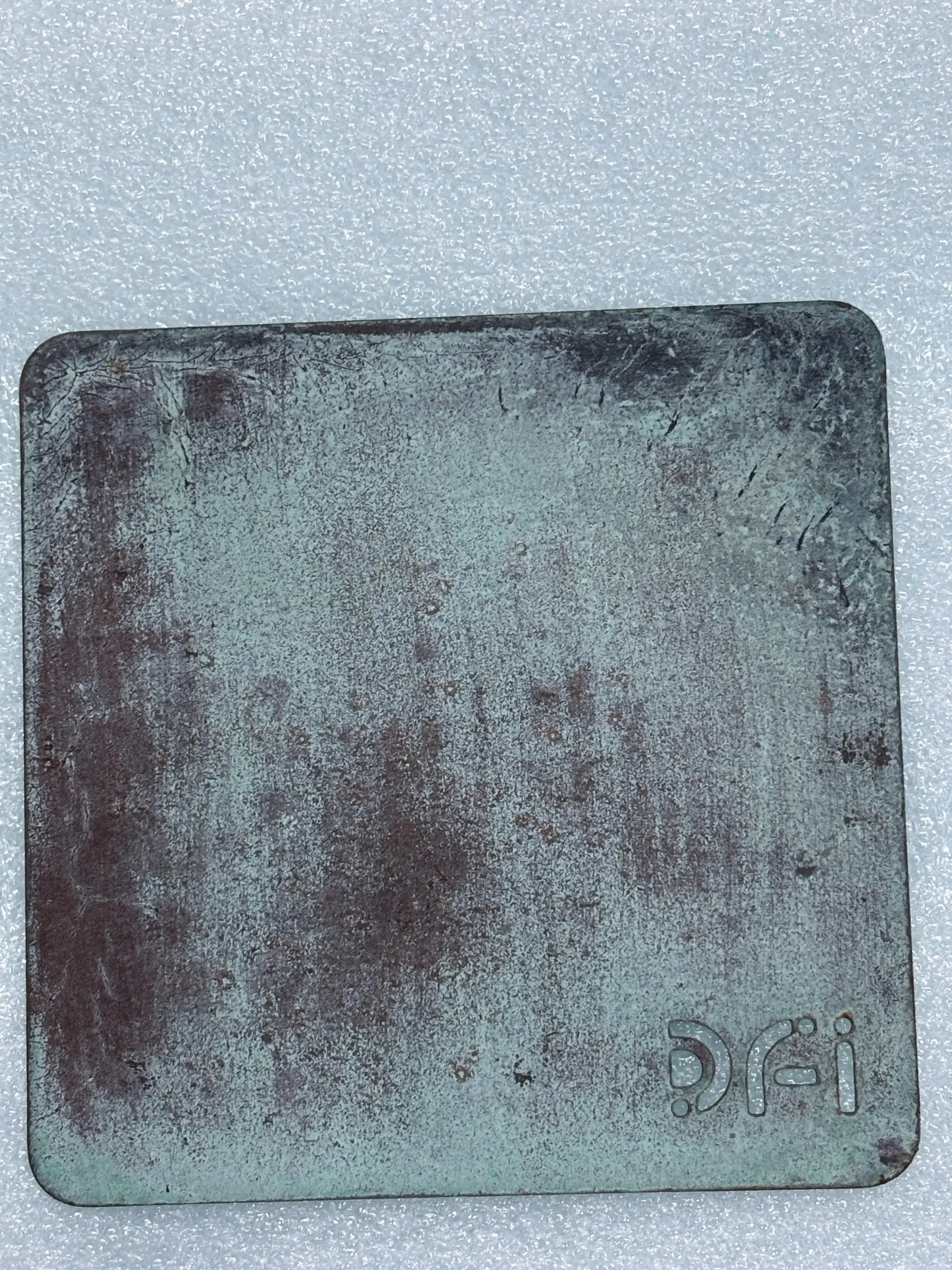
The same finish name — hairline, antique, patina, mirror — means a different thing on every metal, at every thickness, and under every light. A hairline grain on stainless steel is cool and even; the same grain on brass is warm and shows every fingerprint. A patina grown on copper is not the patina grown on bronze. That is why no finish is chosen from a catalogue photograph, and why the workshop makes a sample before the batch.
What the sample is for
It fixes three things. The tone: how light or dark, how warm or cool, once the finish is applied to this metal. The direction: which way the grain runs, which way the light will catch it. And the range: for any finish that is grown rather than applied — patinas, distressing, smoky effects — how much variation is intended between one panel and the next. The batch is judged against that sample, not against a memory of the picture.
Look at it in the right light
A sample approved under fluorescent light in an office looks different under the warm downlights of a hotel corridor, and different again beside a window. Take it to the site, or to a light like the site’s, and look at it from the distance people will see the finished piece. A texture that reads richly at arm’s length can read as dirt from across a room.
Then it becomes the standard
Once approved, the sample is kept. Every panel in the batch is matched to it, and if a panel is replaced years later, it is matched to it again. That is the difference between a finish and a mood.