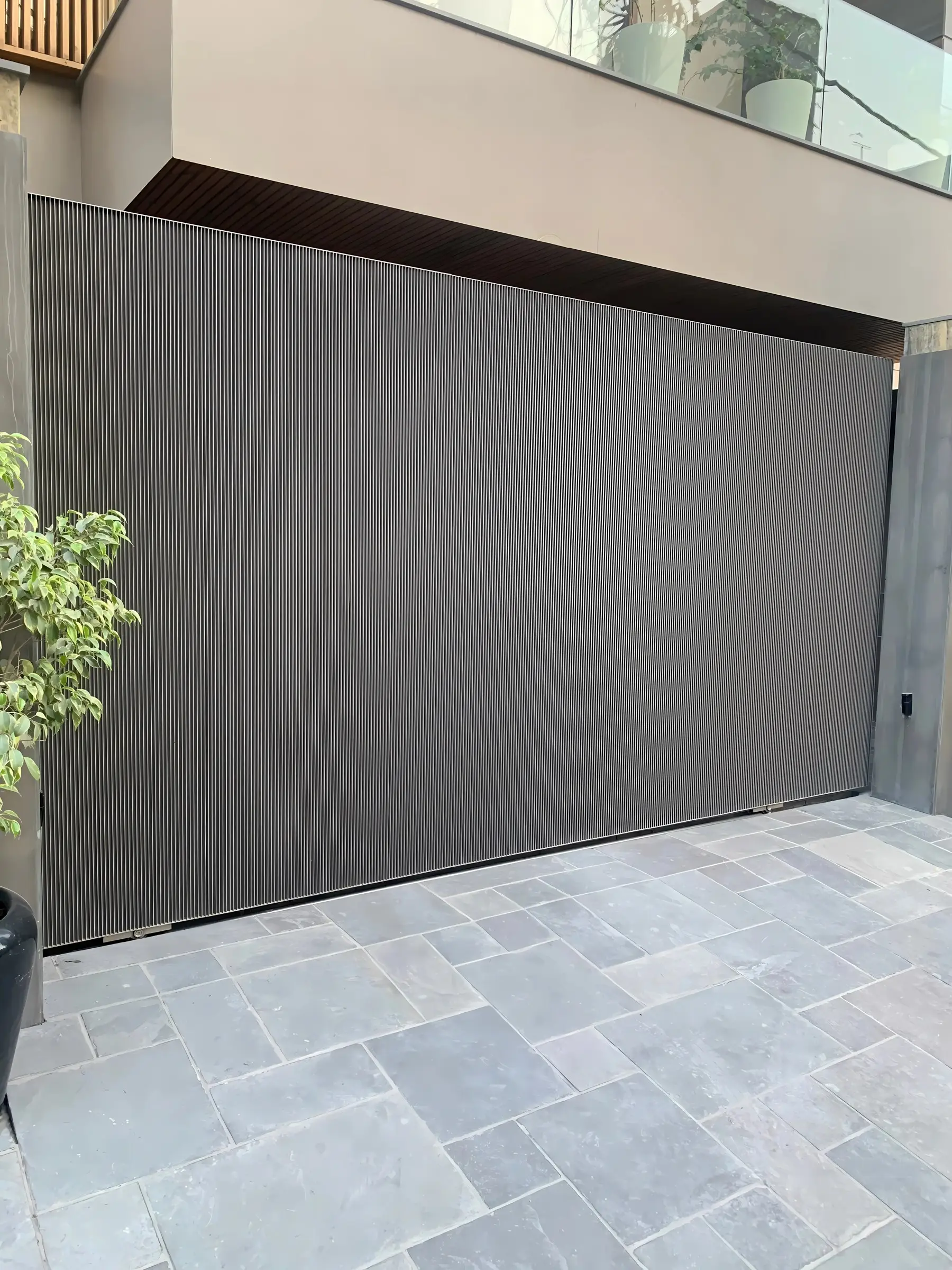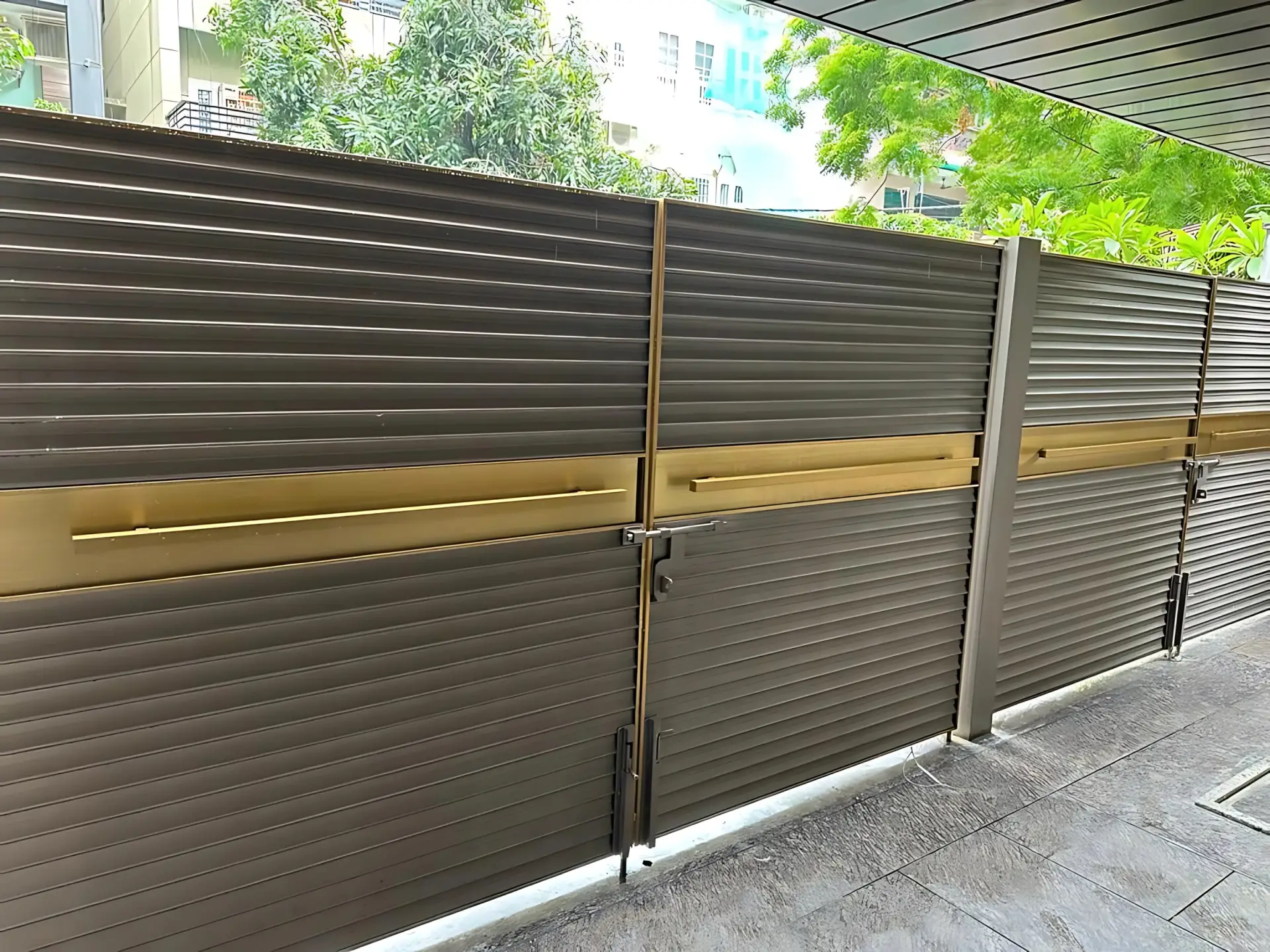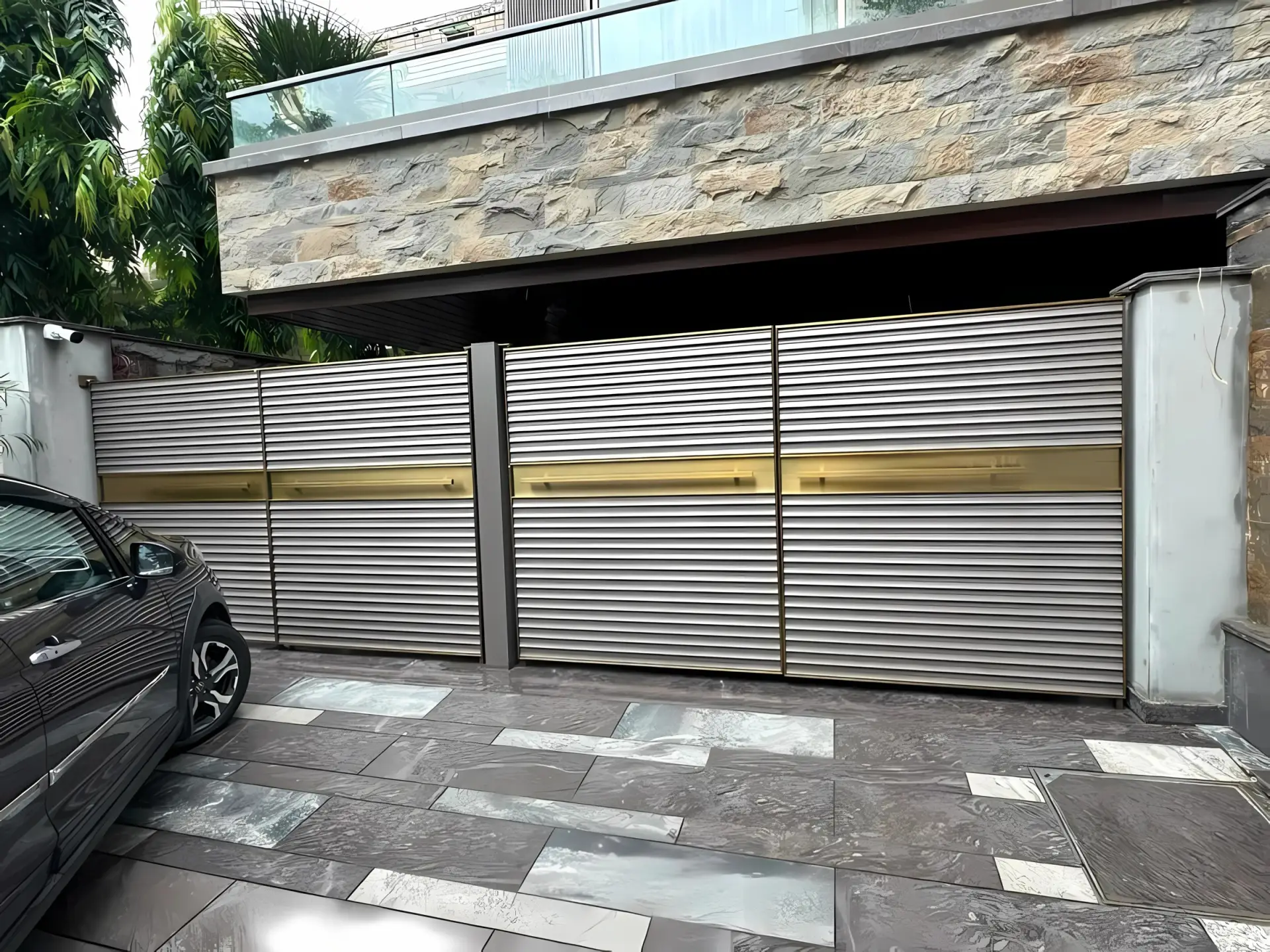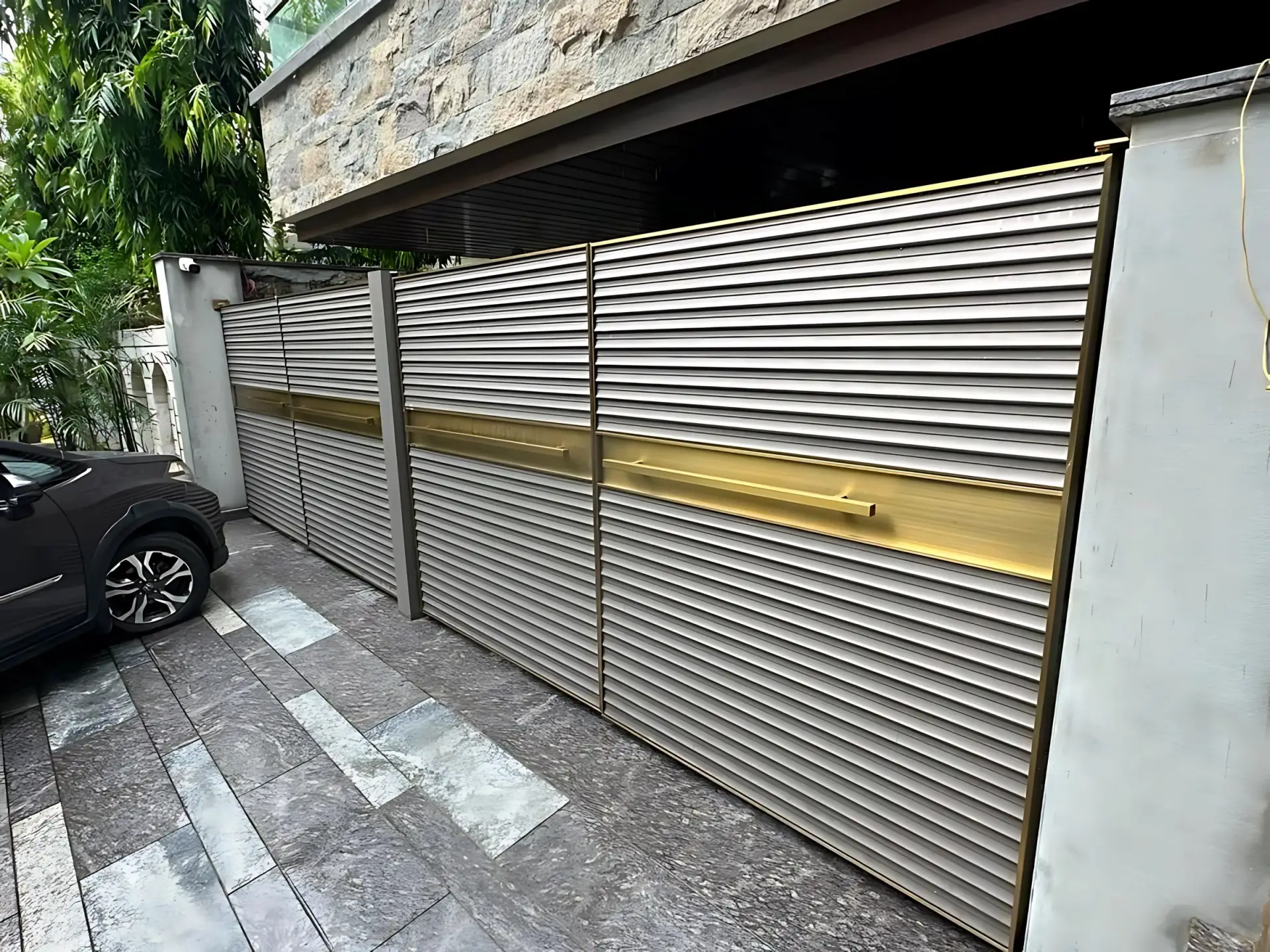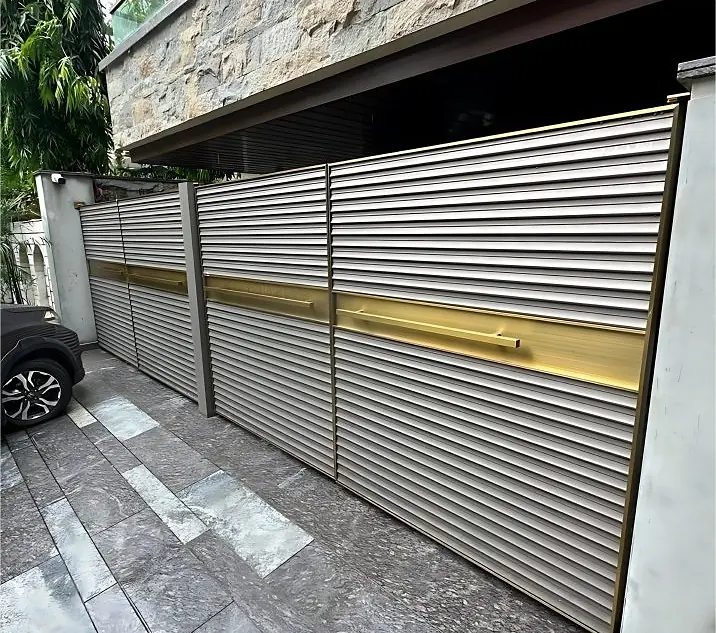
The threshold, made to last.
A gate is the one piece of architectural metalwork that is also a machine: it has to look right standing still and work right ten thousand times.
A boundary gate lives a harder life than anything indoors. It is opened and closed more times than any door in the building, it takes the weather from every side, and it is the first thing a visitor forms an opinion about — usually before the car has stopped.
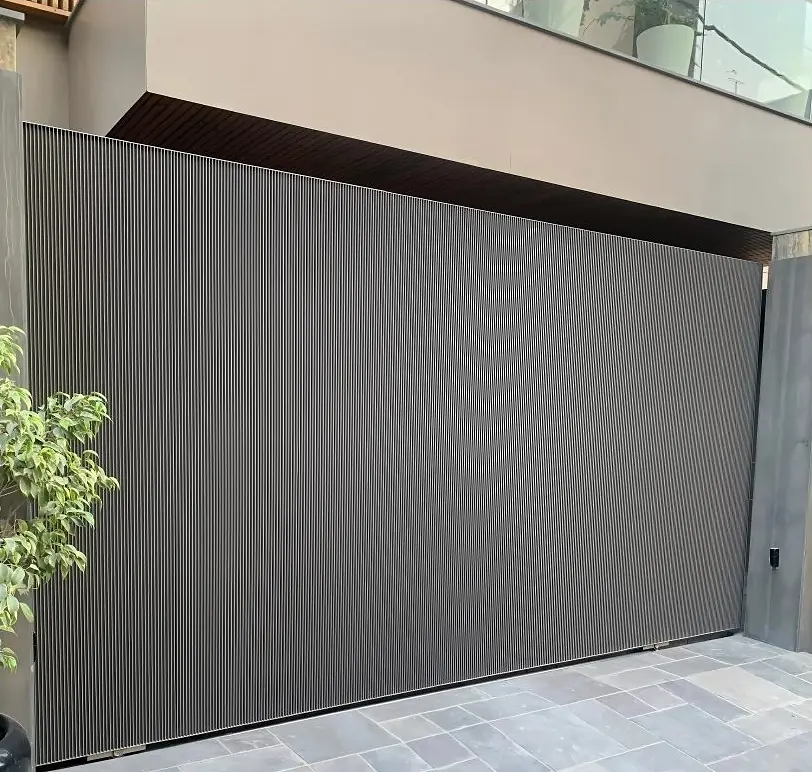
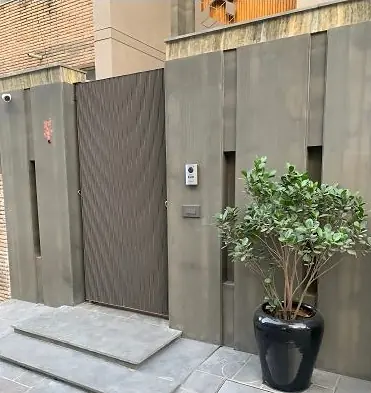
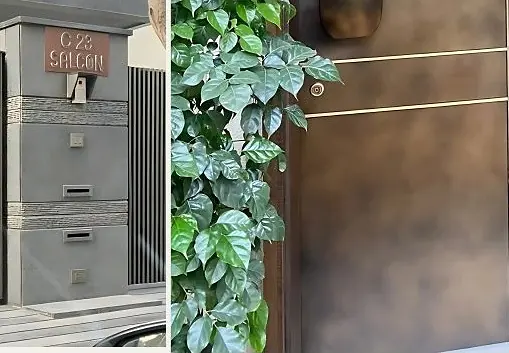
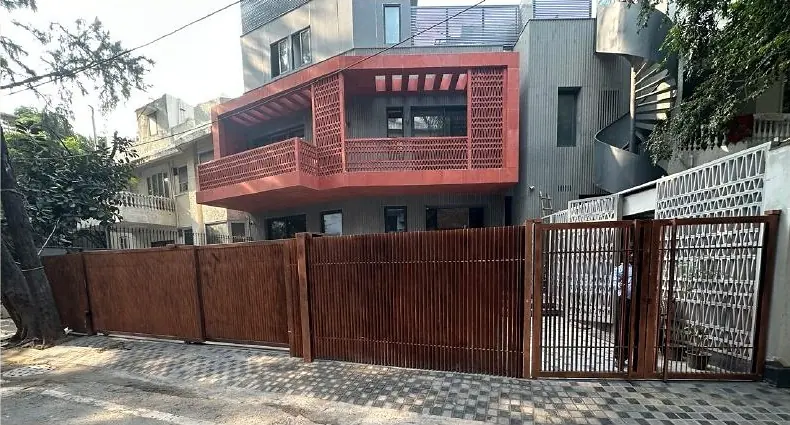
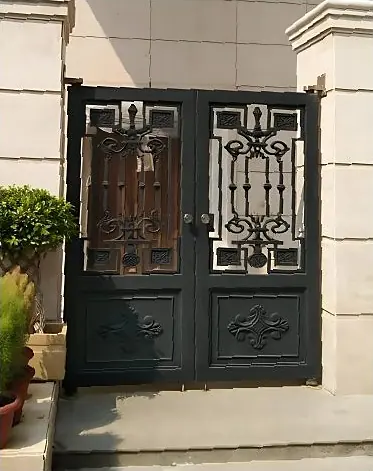
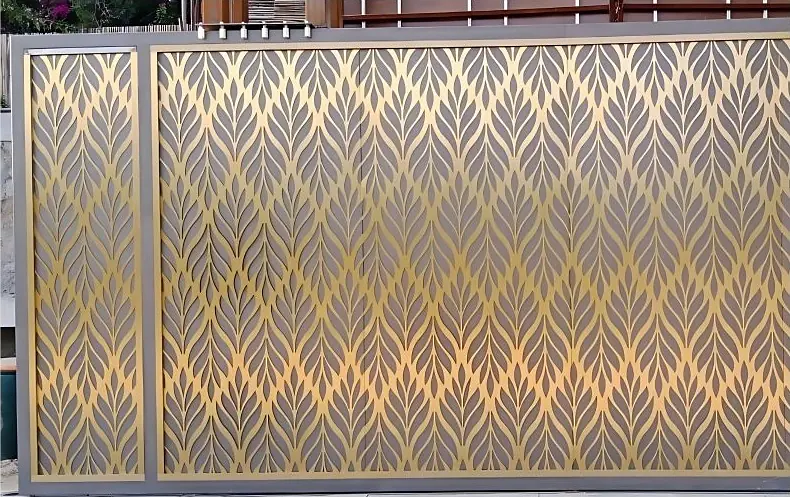
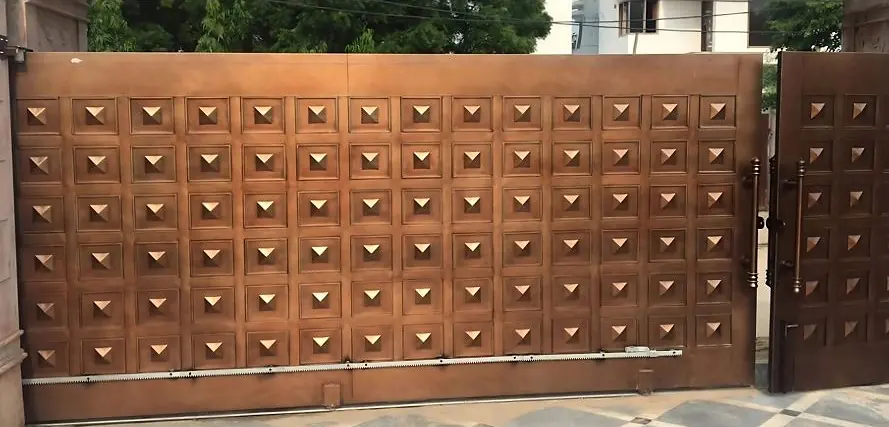
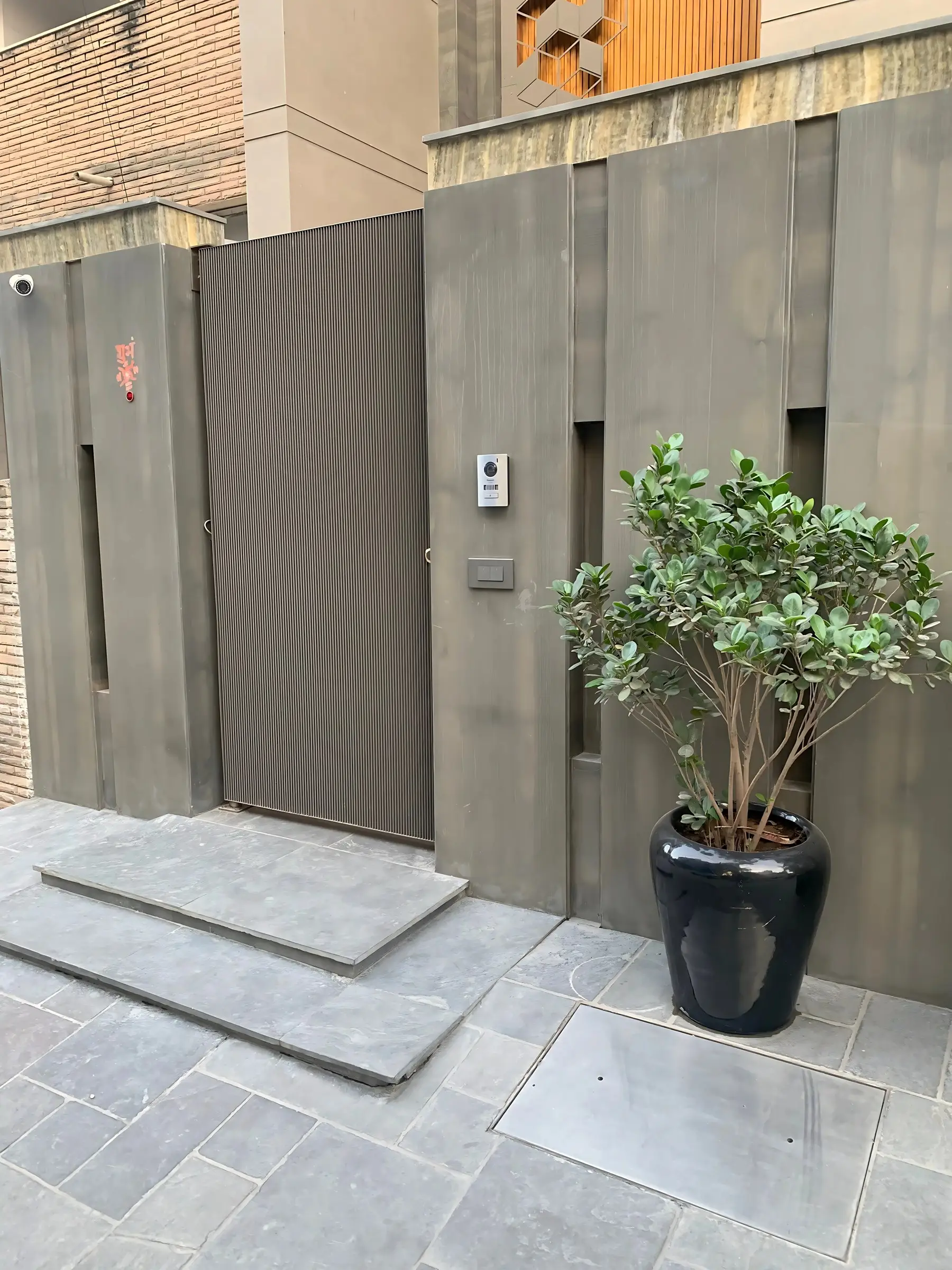
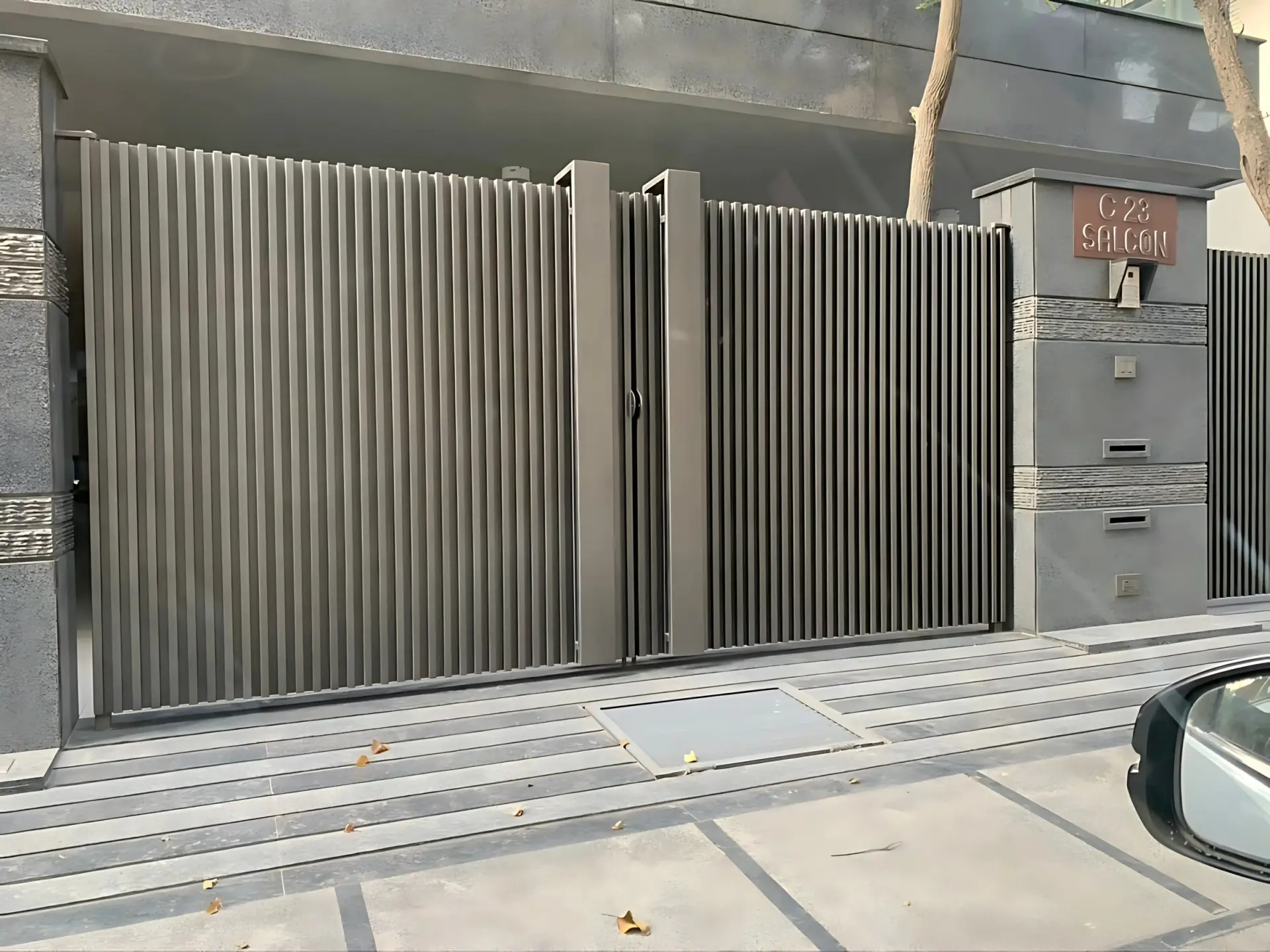
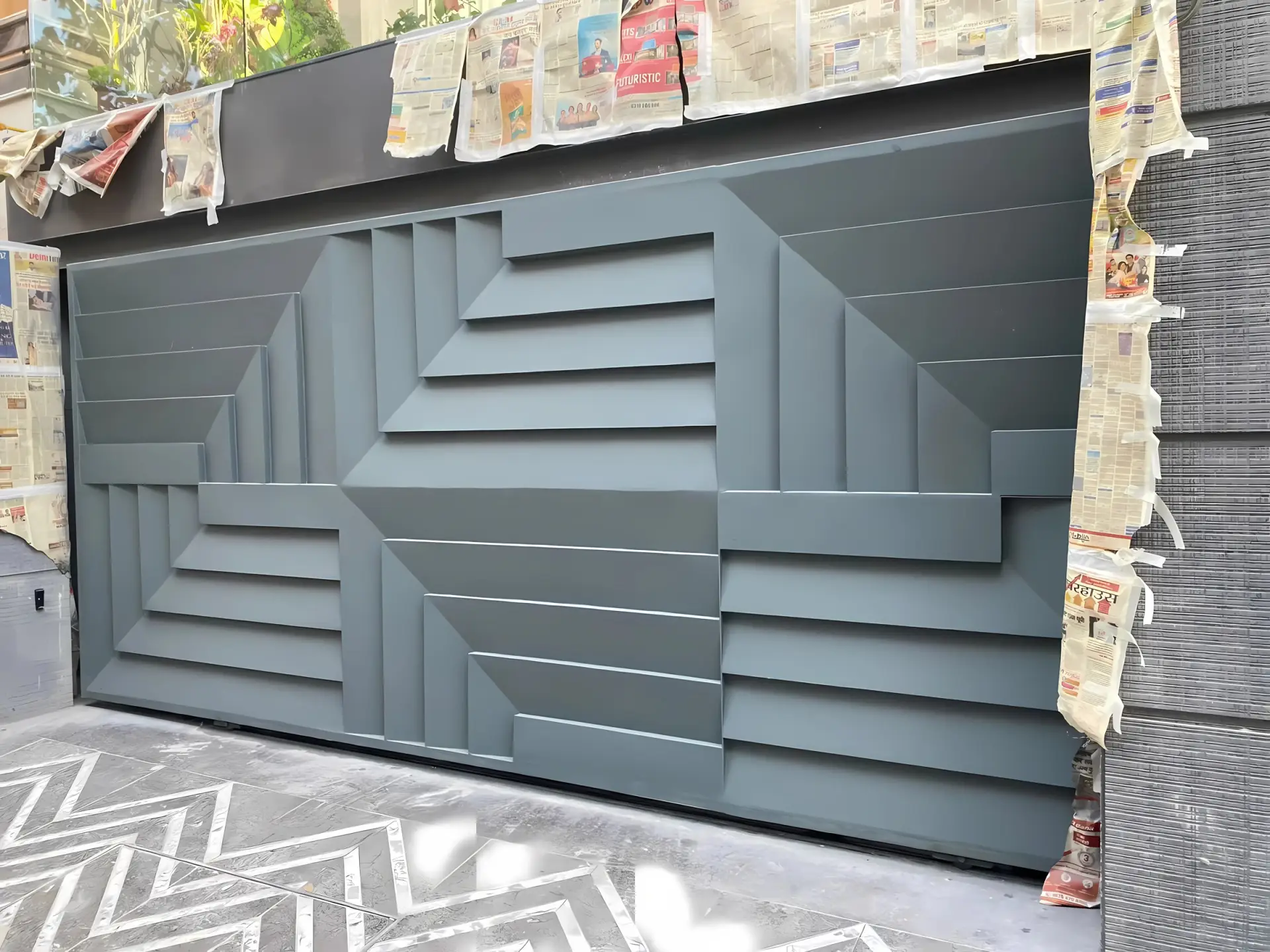
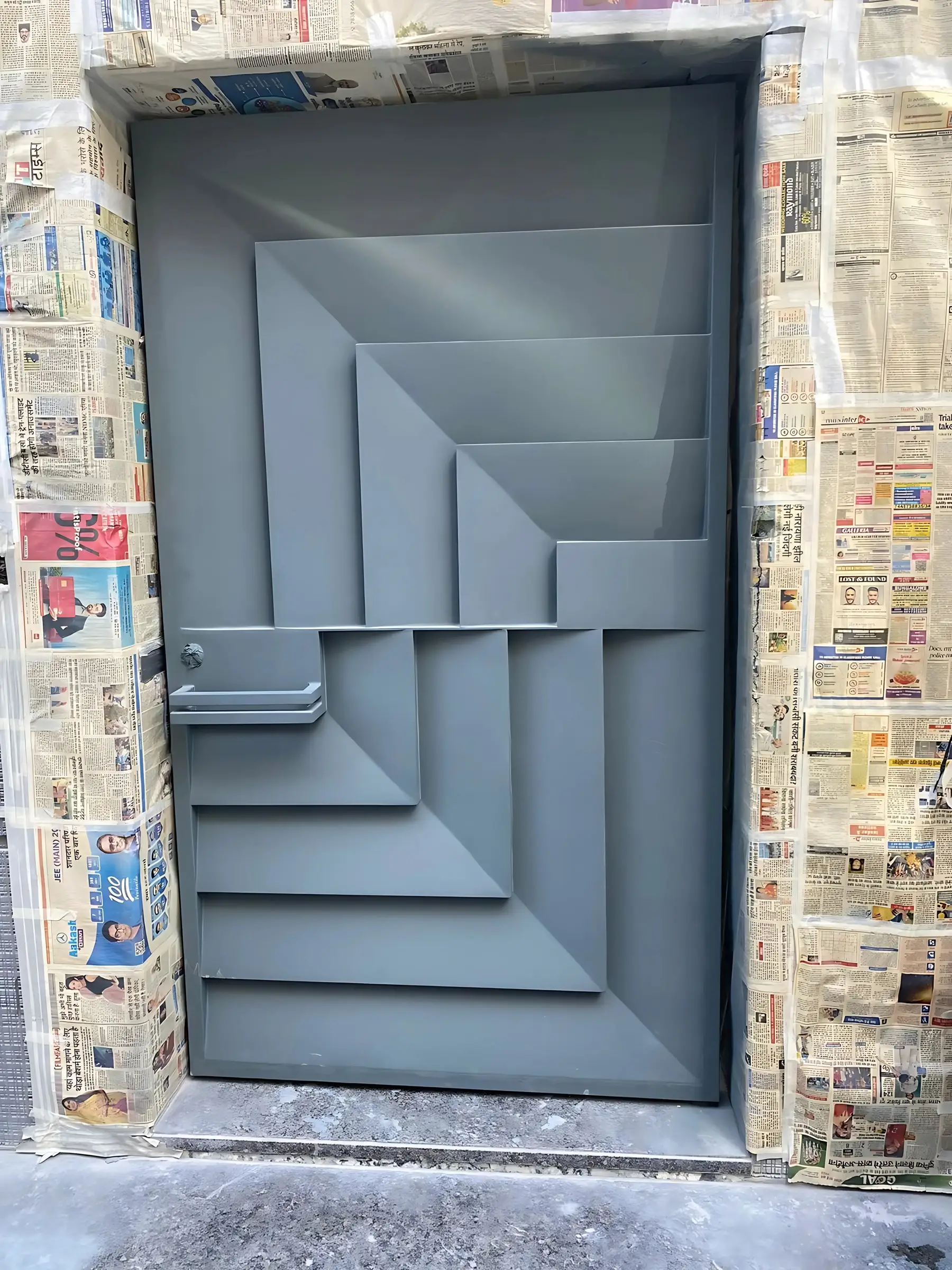
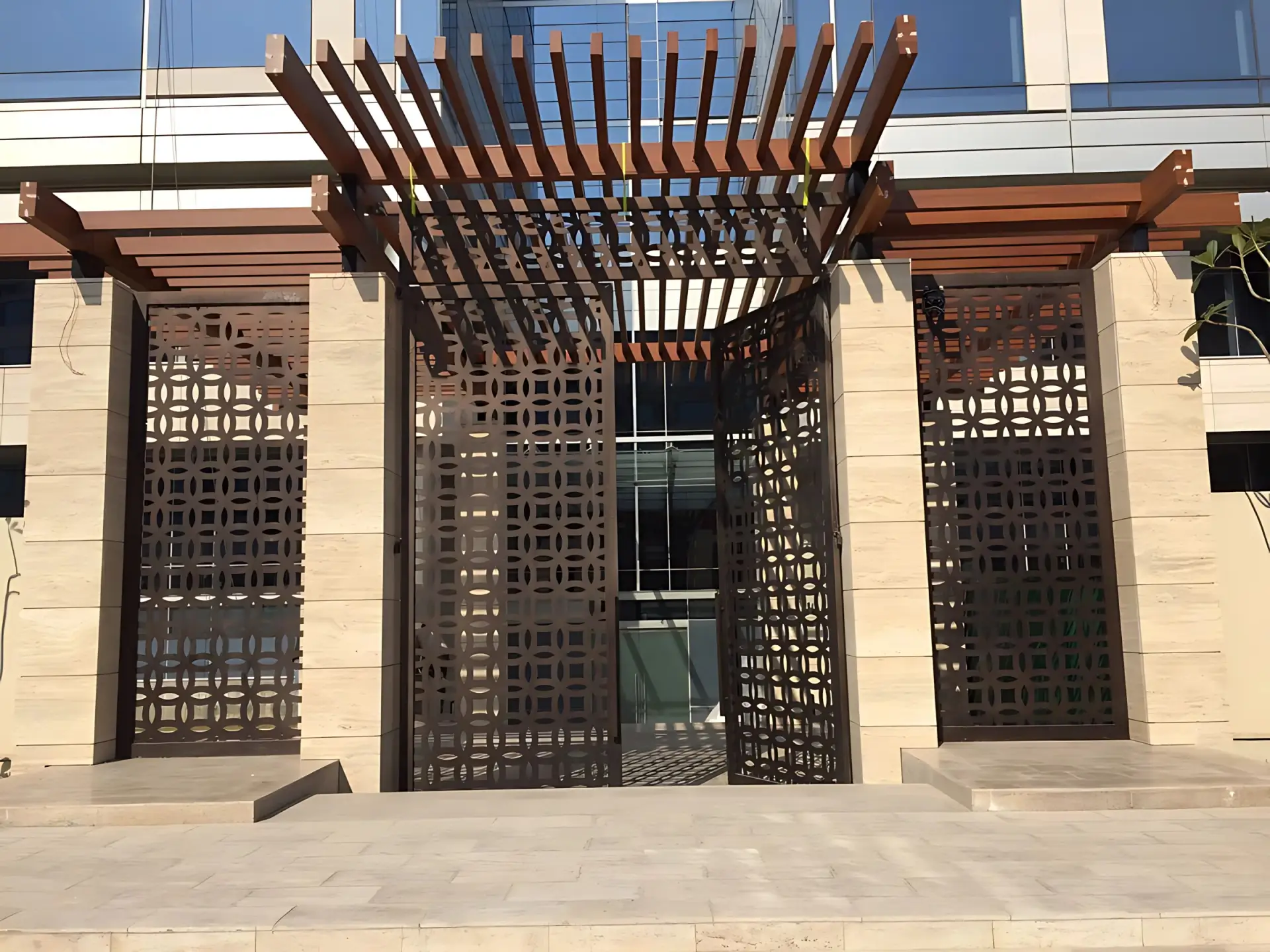
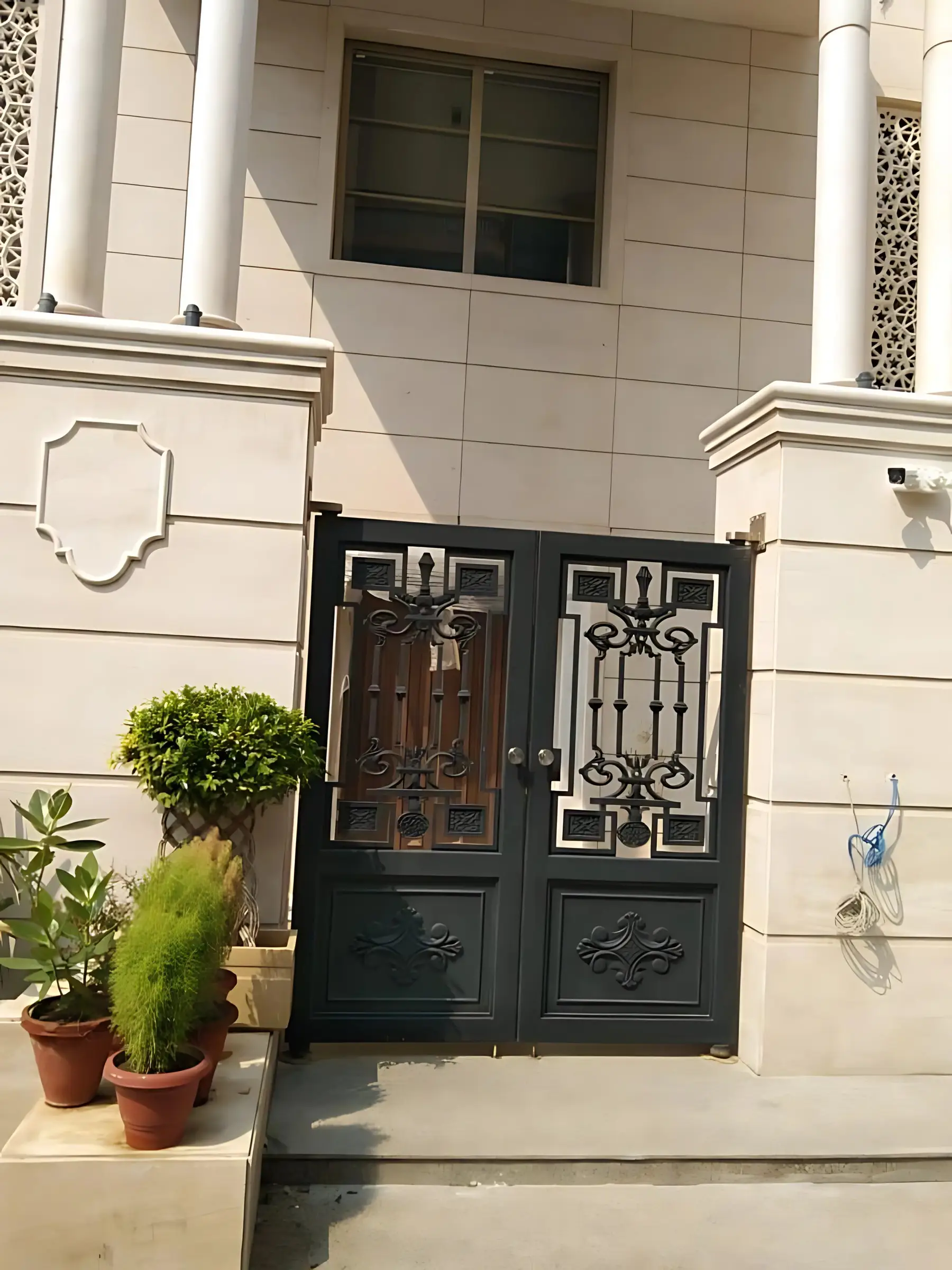
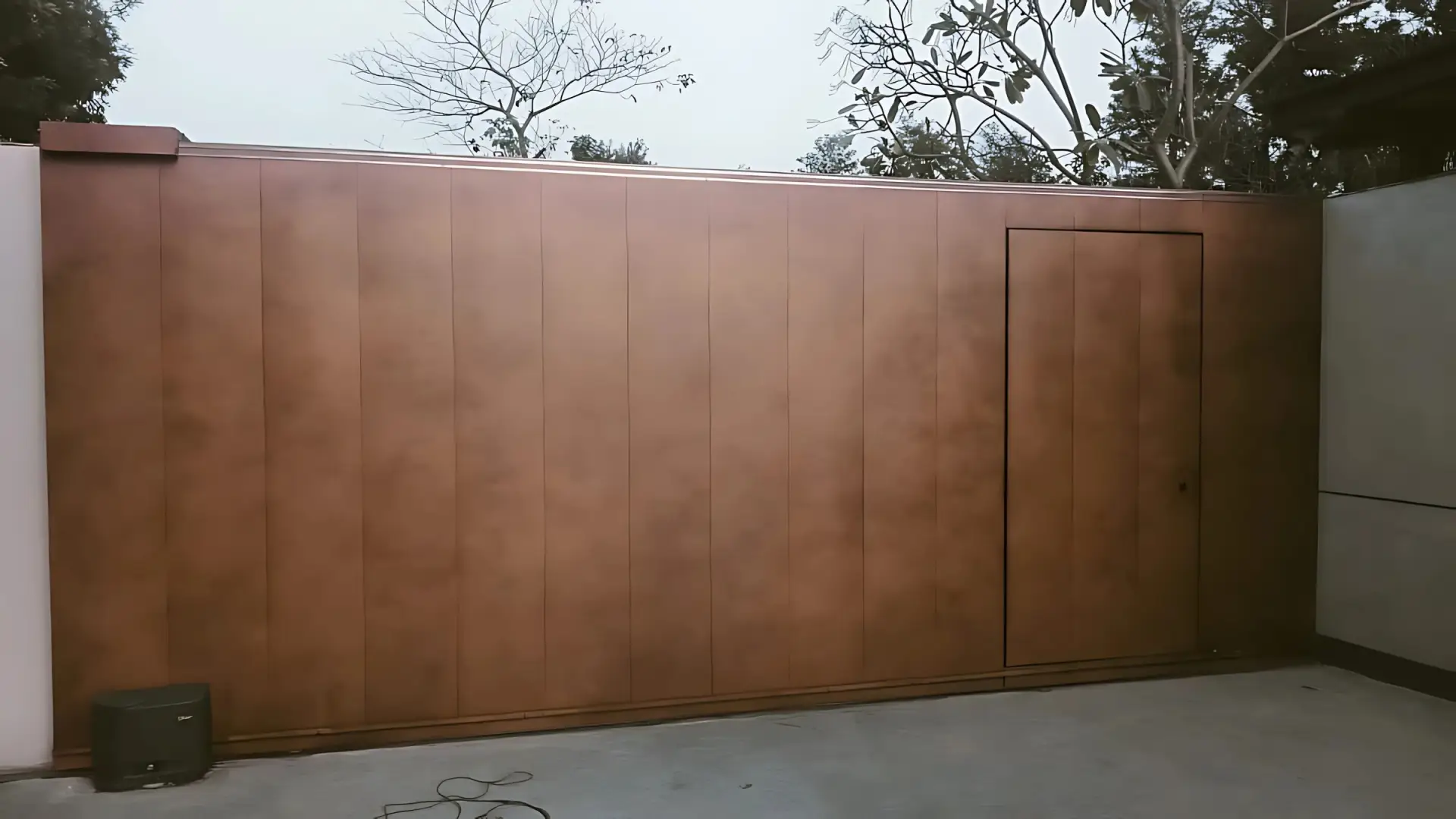
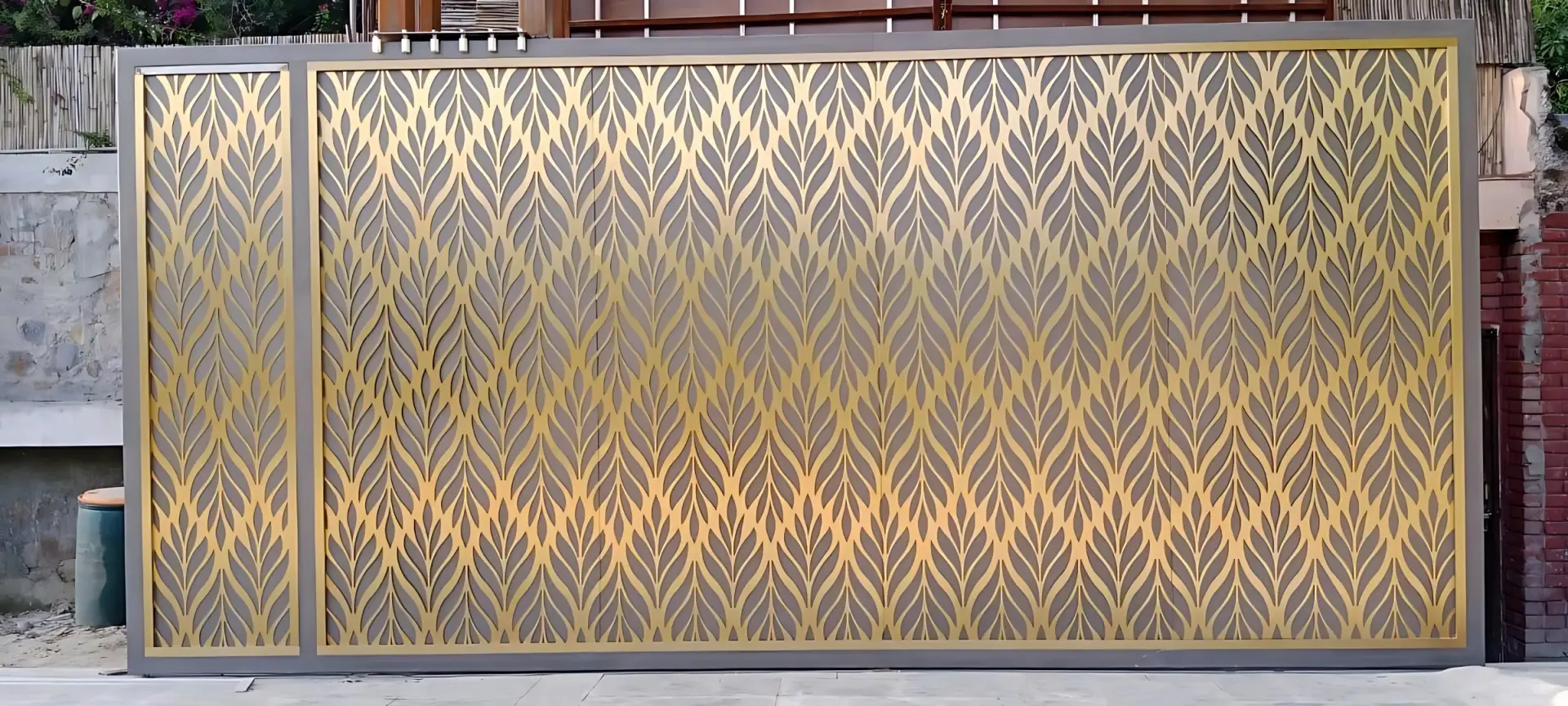
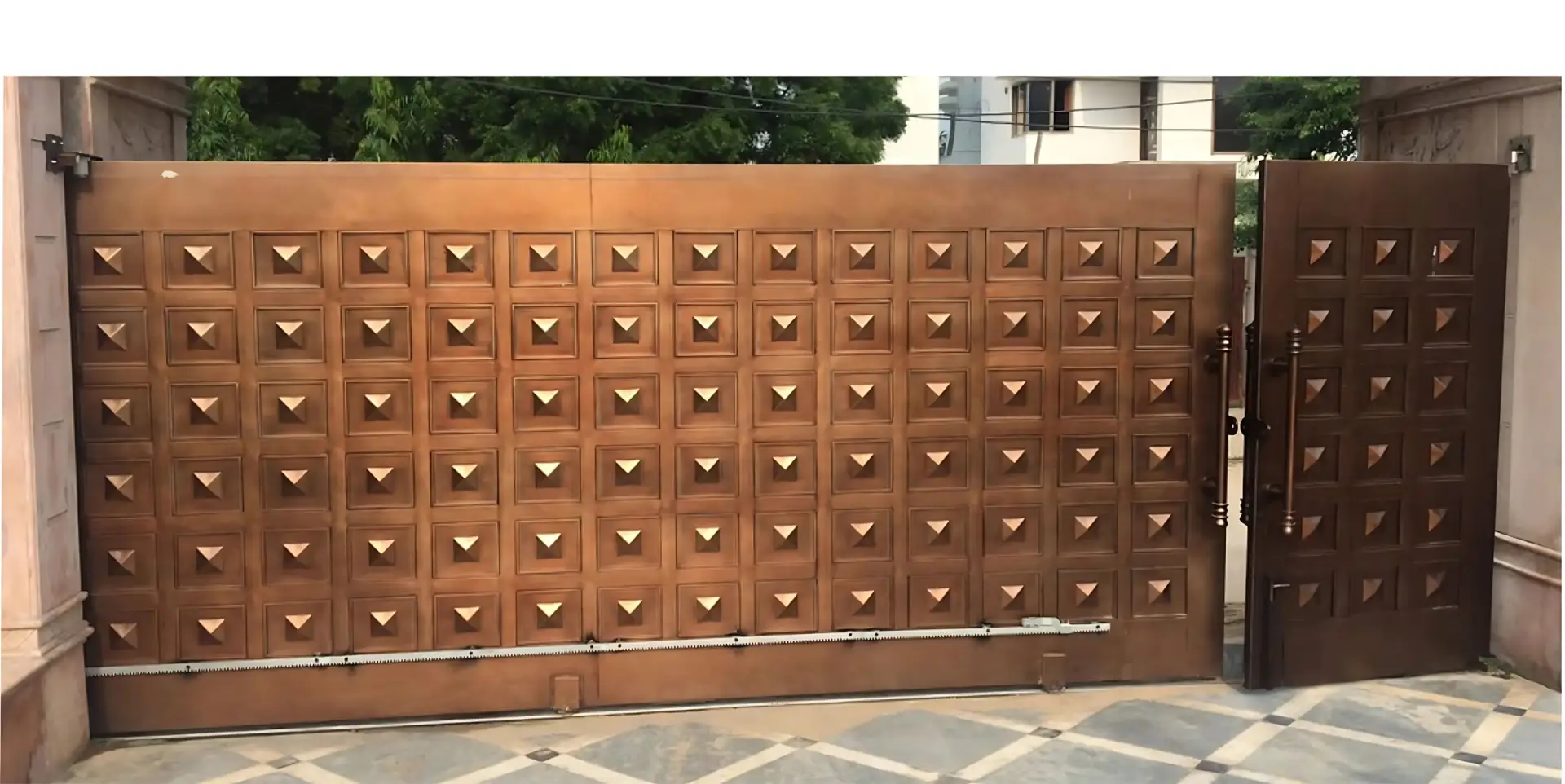
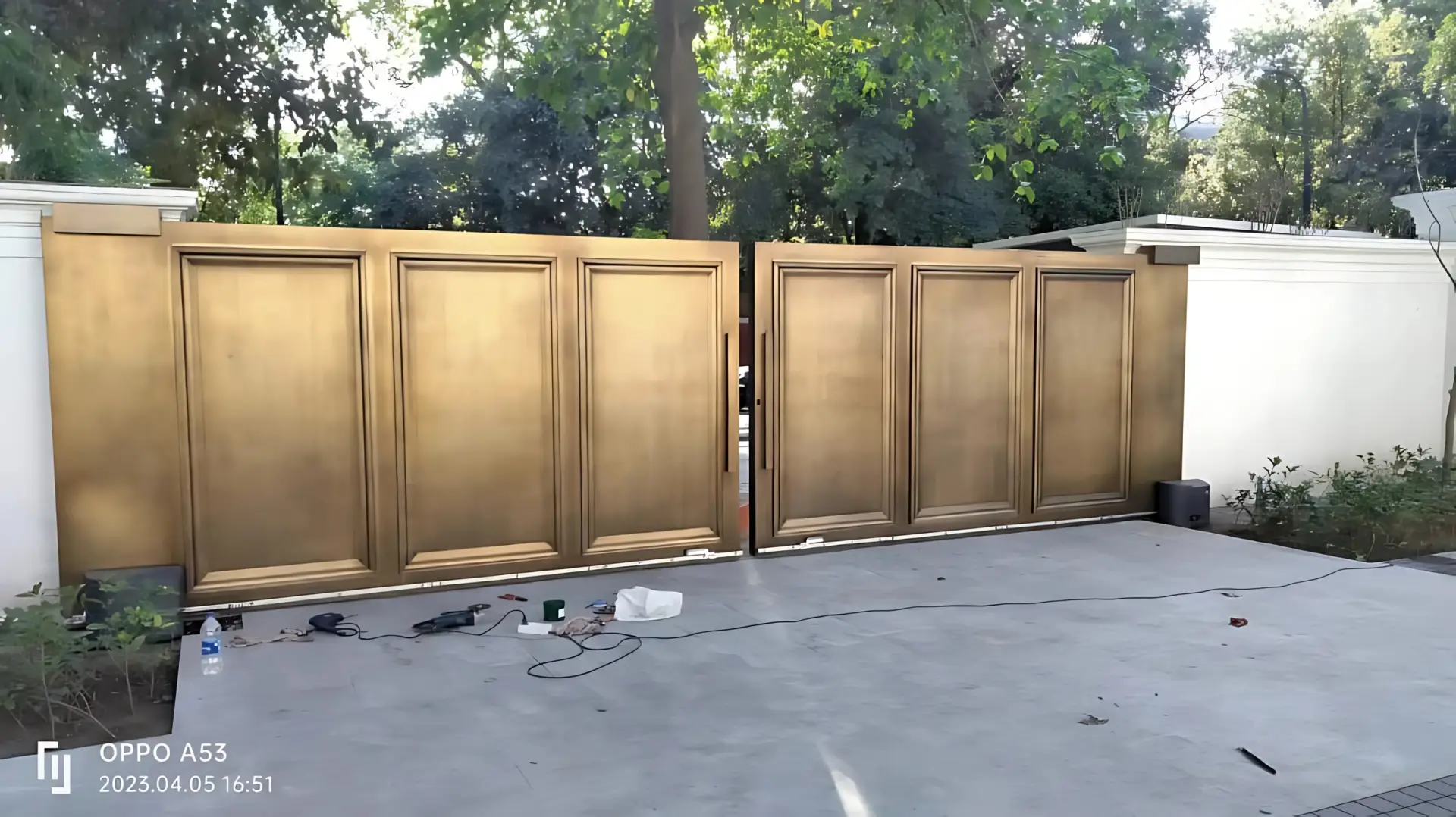
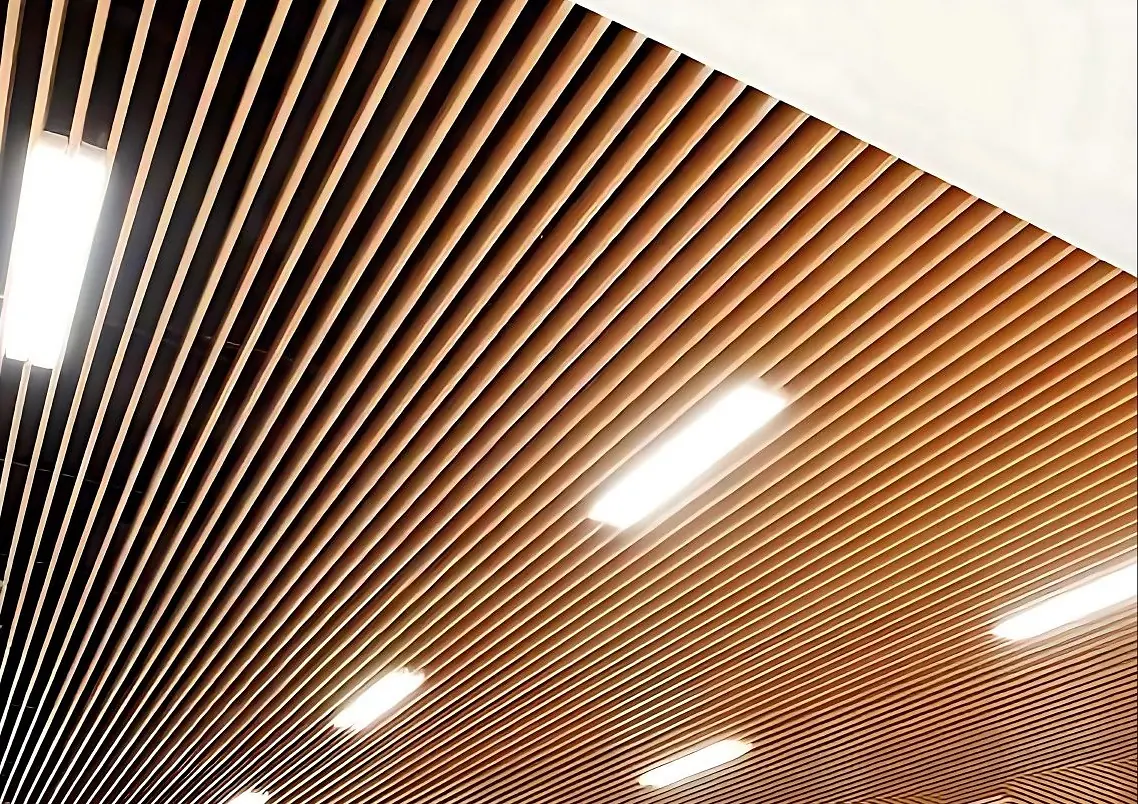
That means two designs happening at once. One is what the gate looks like: a louvred face, a laser-cut brass screen, a slatted rhythm that continues into the fencing, studded copper, a wrought double leaf. The other is what makes it move: the hinge geometry, the weight the posts carry, the track a sliding gate runs on, and how the automation is hidden so the face stays clean.
The metal is chosen for the exposure as much as the look. Brass and copper weather into themselves; mild steel needs a finish that will not chip at the bottom rail where water sits; stainless steel holds its line for decades but has to be specified for the grade that resists the local air.
The fencing, if there is any, is drawn as part of the same piece. A gate that does not continue into its boundary reads as an object dropped in front of a wall rather than the wall’s own opening.