Discipline

Railings & Staircases

Balustrades and stairs where the structure and the ornament are the same thing.

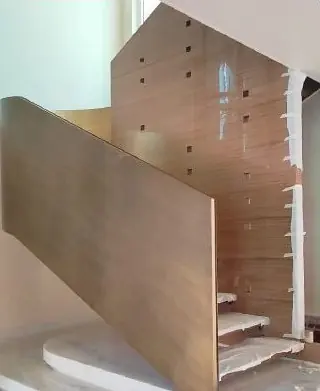
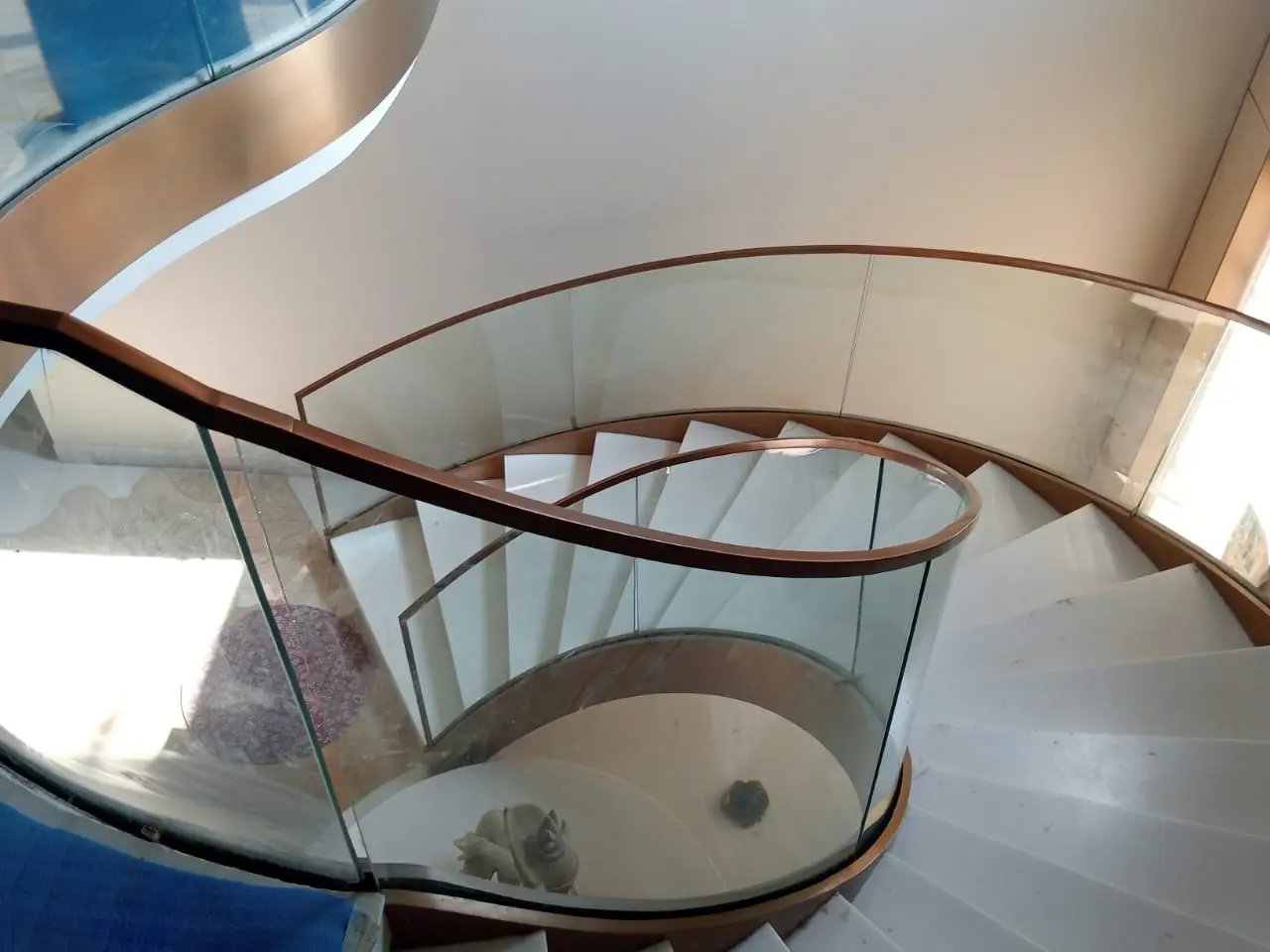
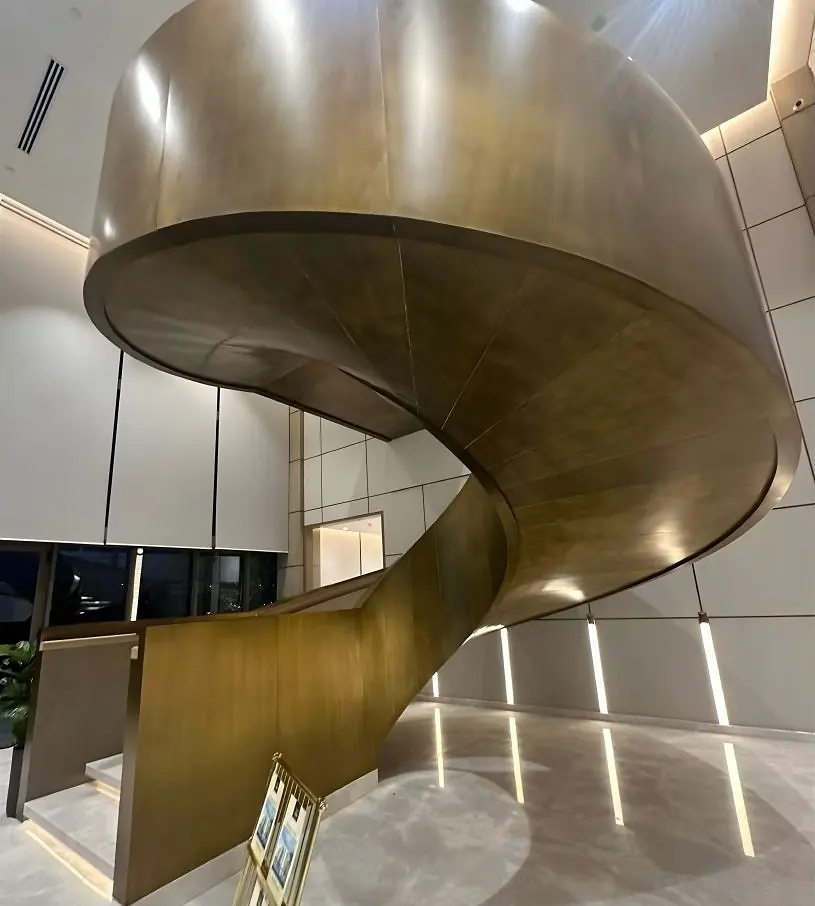
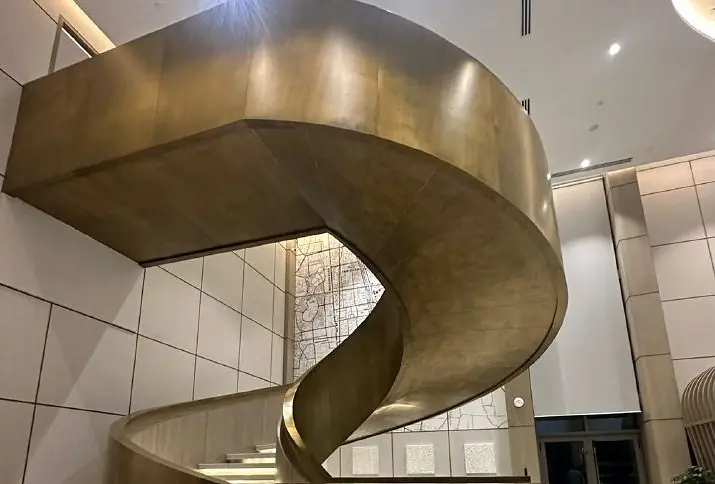
Underside of a sculpted bronze spiral staircase showing its continuous folded soffit

The hardest thing in the building to fake.

Balustrades and staircases where the structure and the ornament are the same thing.

A staircase is the one element a visitor experiences with their whole body. It is also the element where fabrication error is most obvious: a rising handrail that wanders, a baluster spacing that drifts, a glass channel that is not quite parallel.

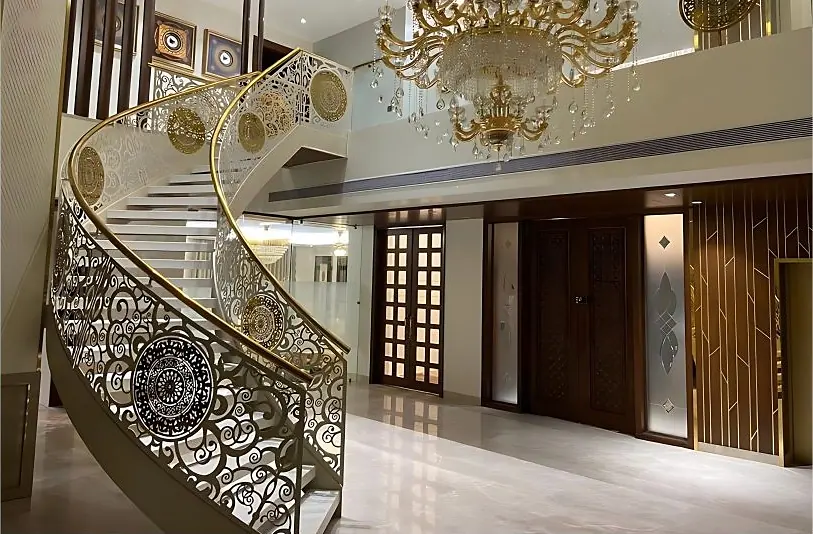
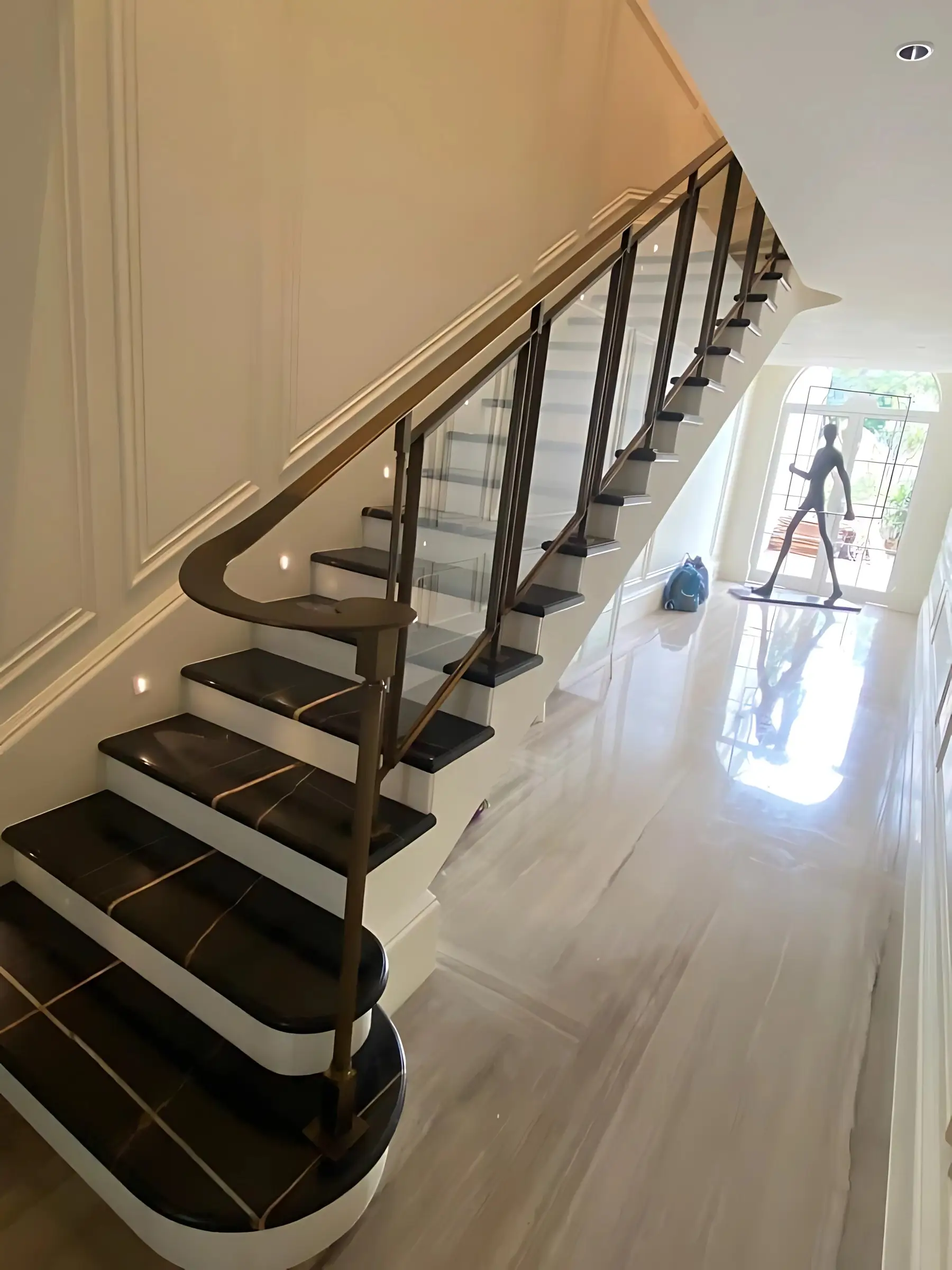
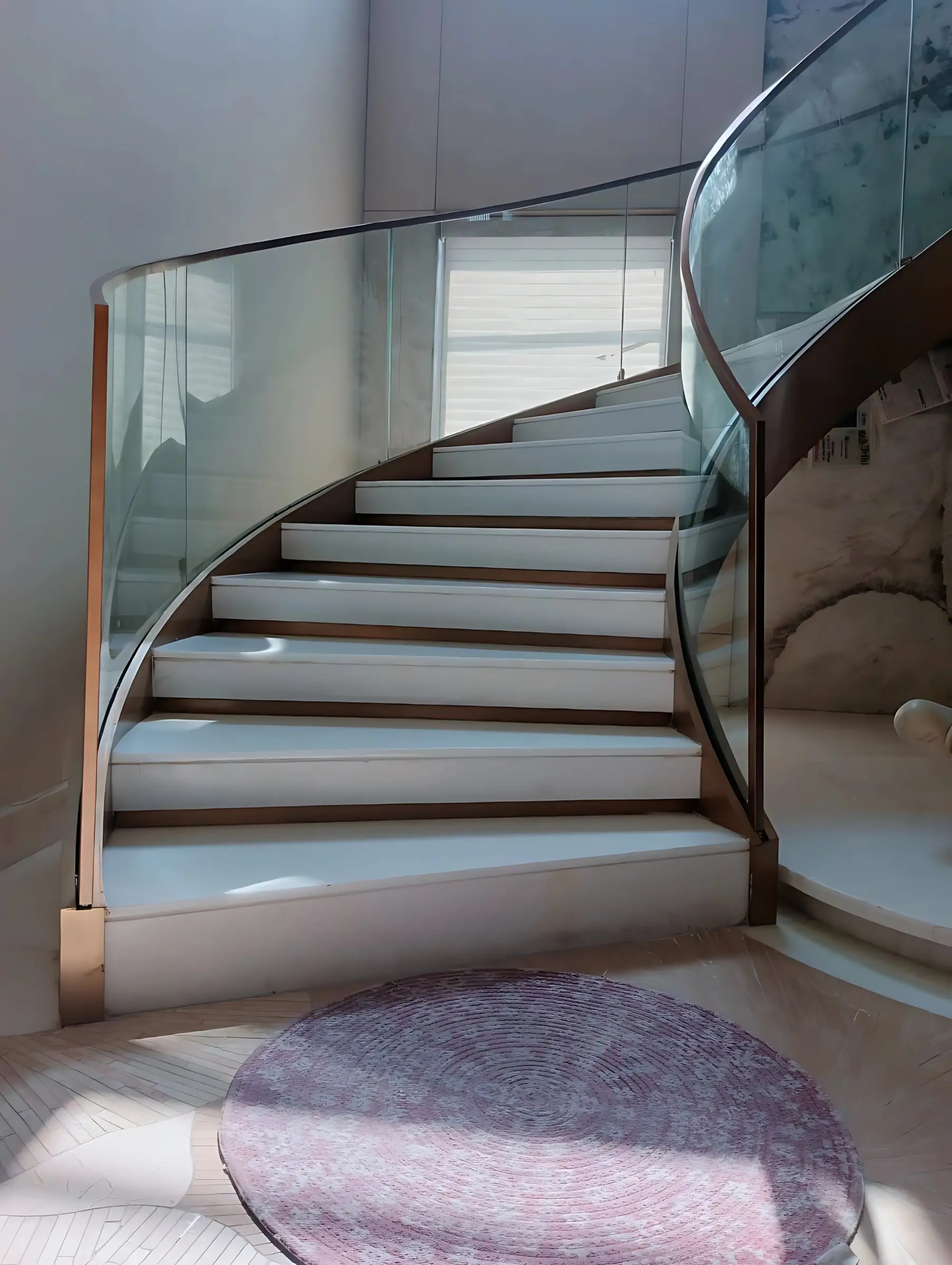
Curved and helical work is measured and set out from the actual site rather than the drawing, because the two are rarely identical. Handrails are formed on our pipe bending machine to a consistent radius, and the joints are dressed until the run reads as one continuous piece.

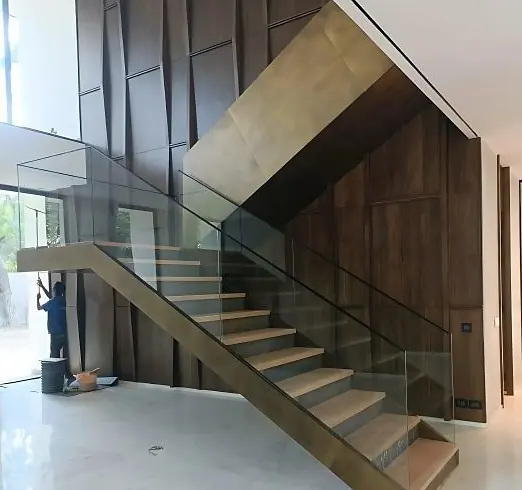
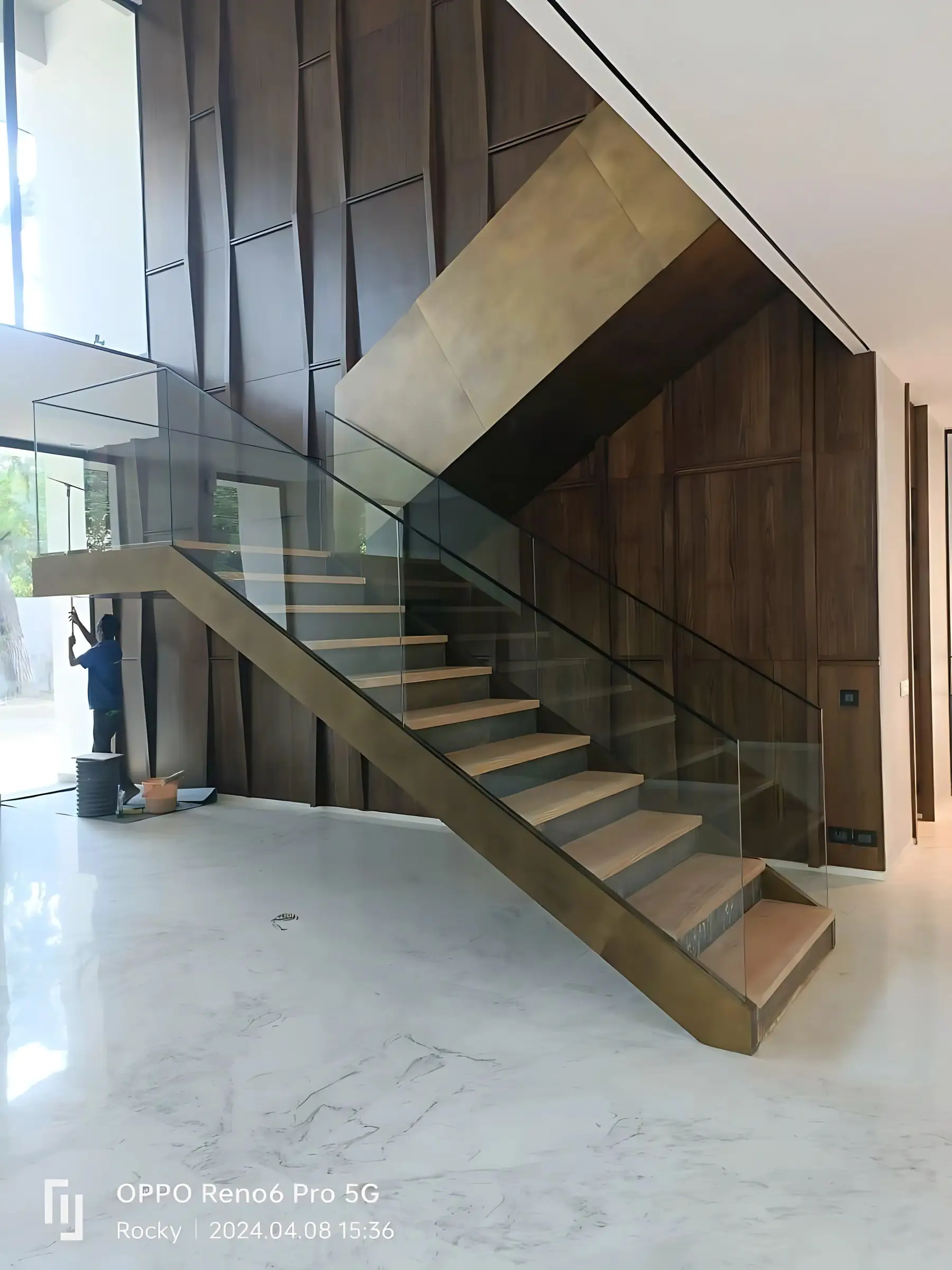
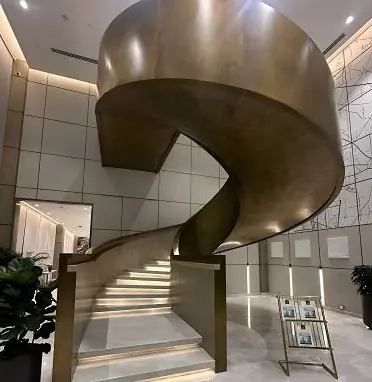
The bronze-clad helical stair on this page is a good illustration: the soffit had to be a single unbroken surface, which meant every panel was developed, formed and welded to the true curve rather than approximated in facets.
In pictures

Railings & Staircases from the workshop

The gallery
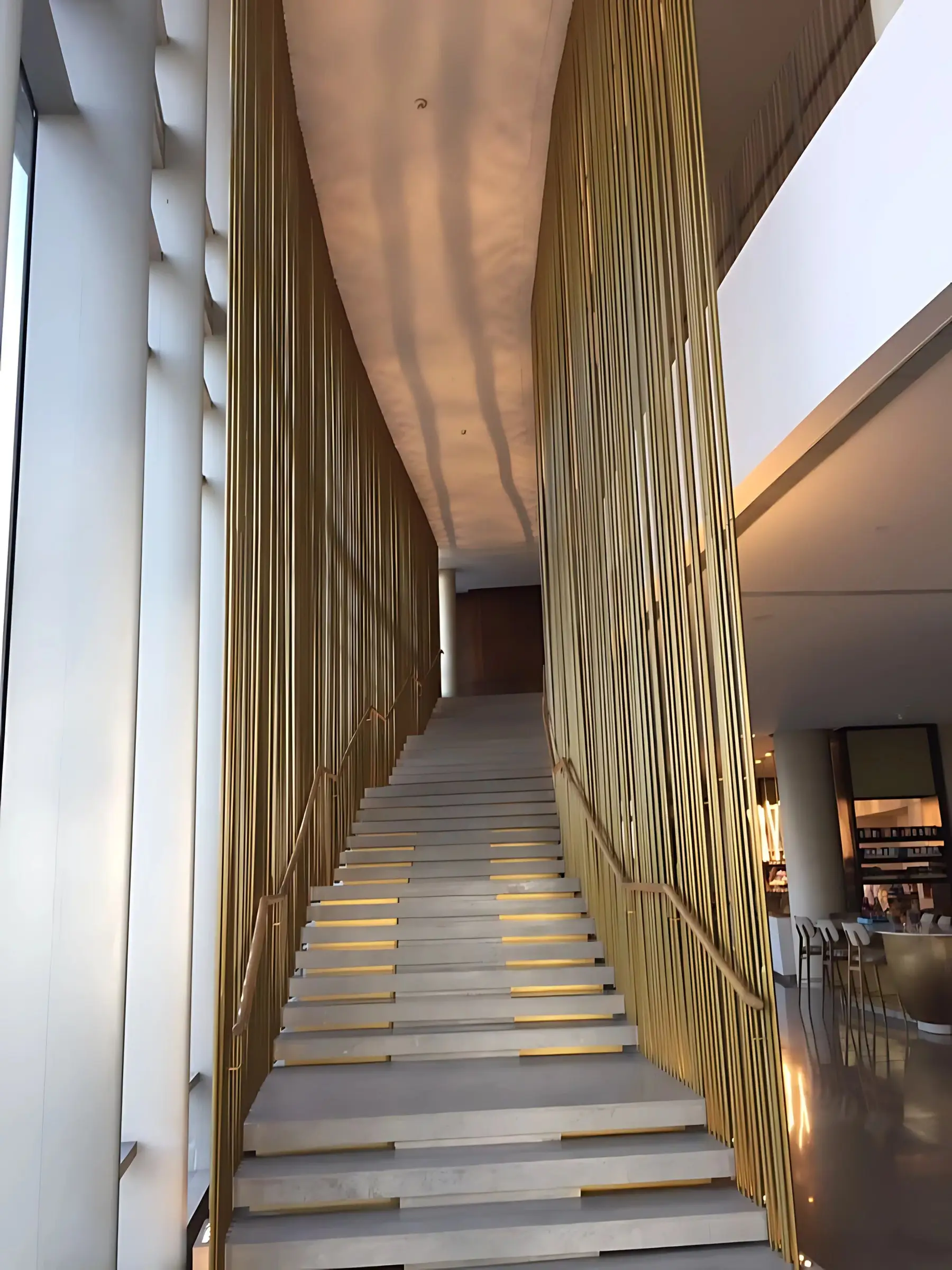
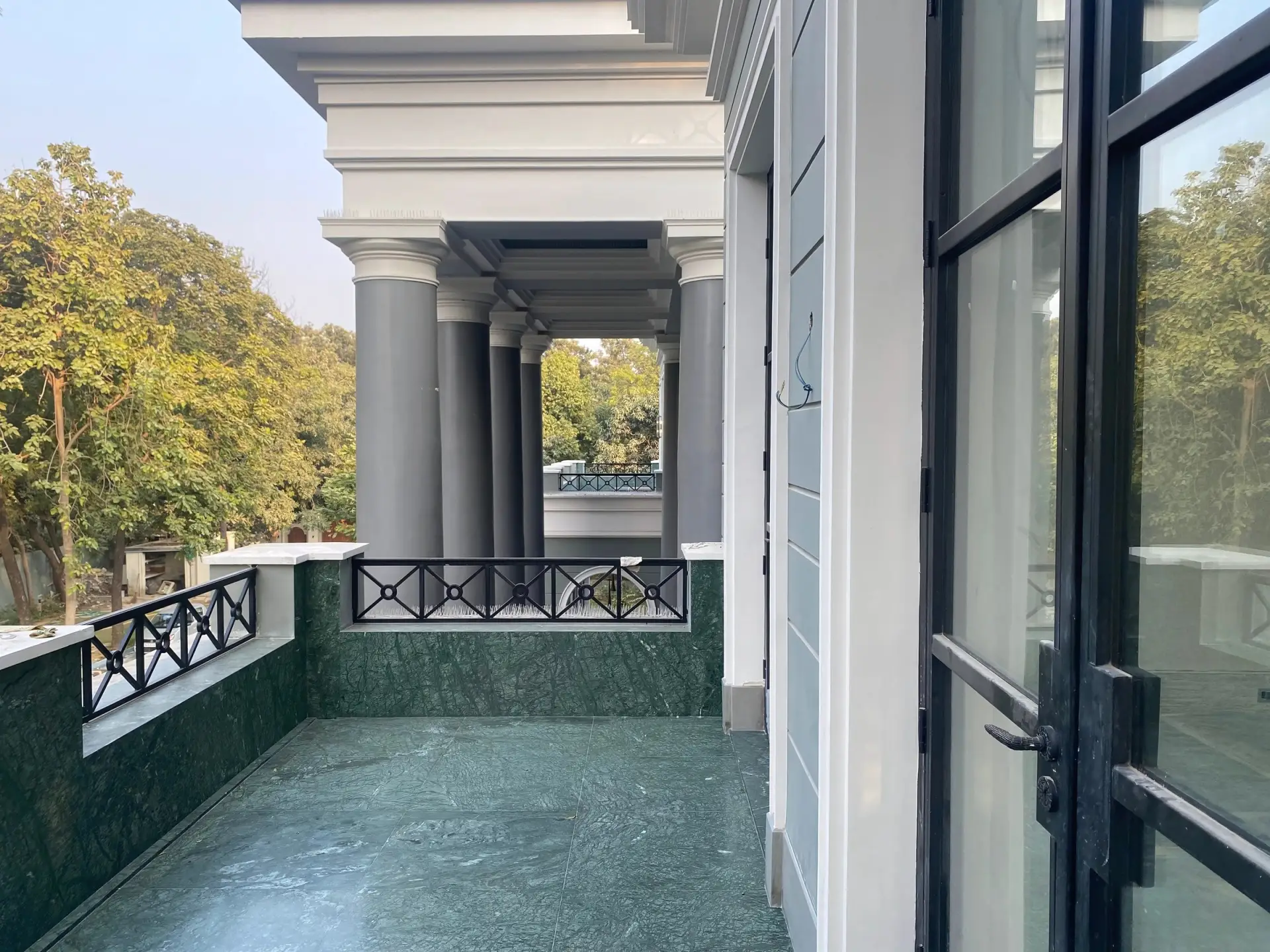
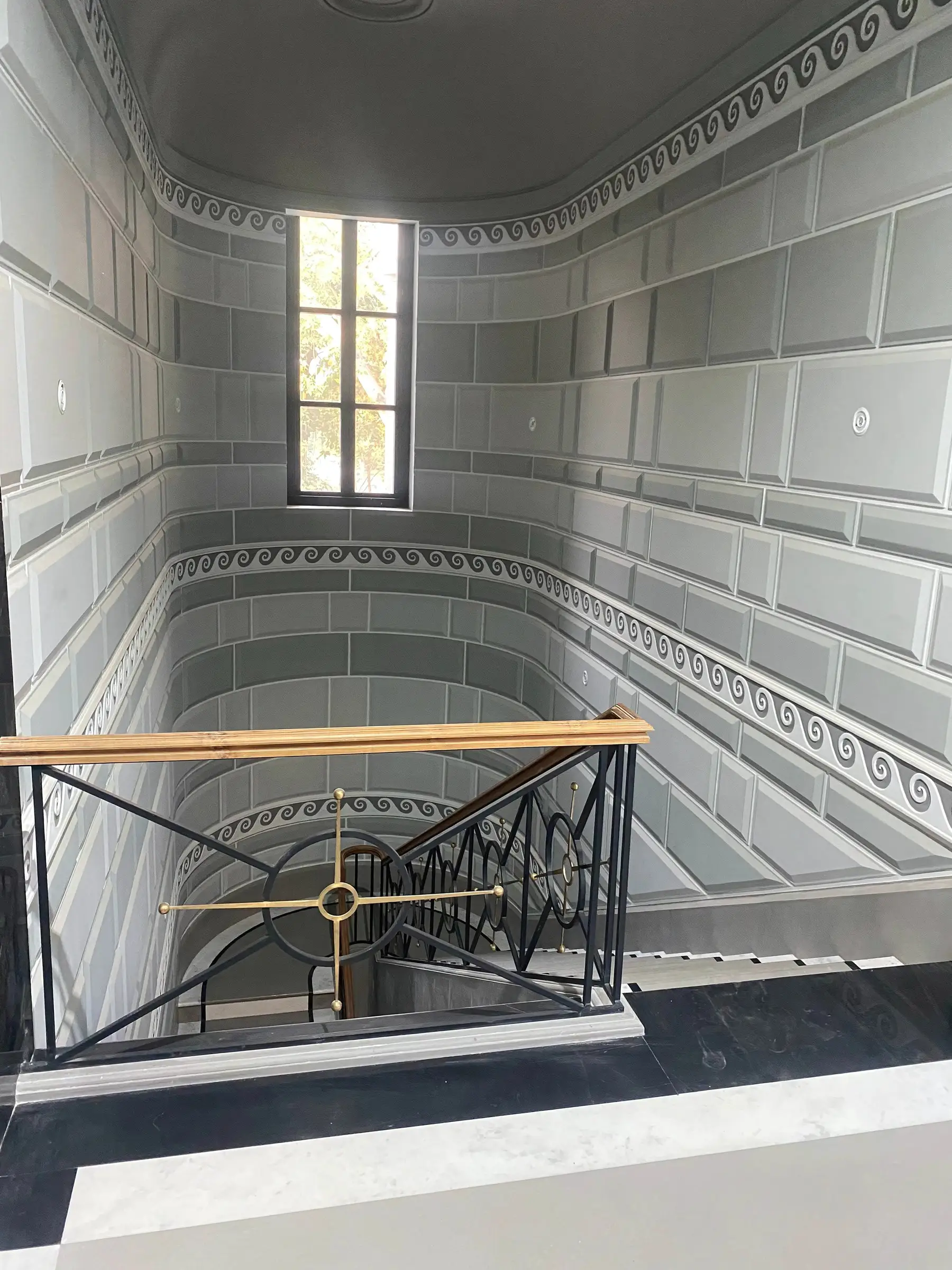
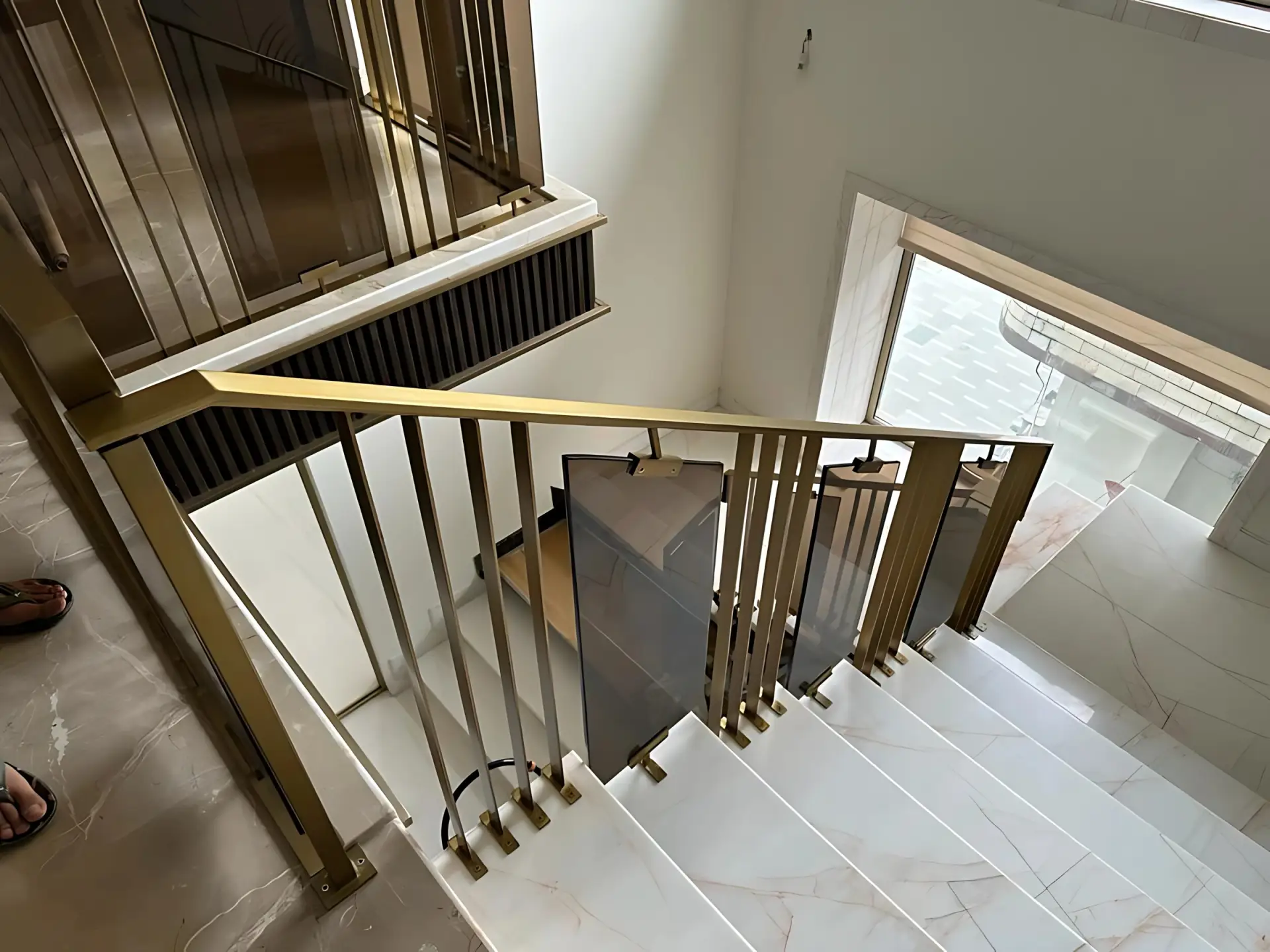
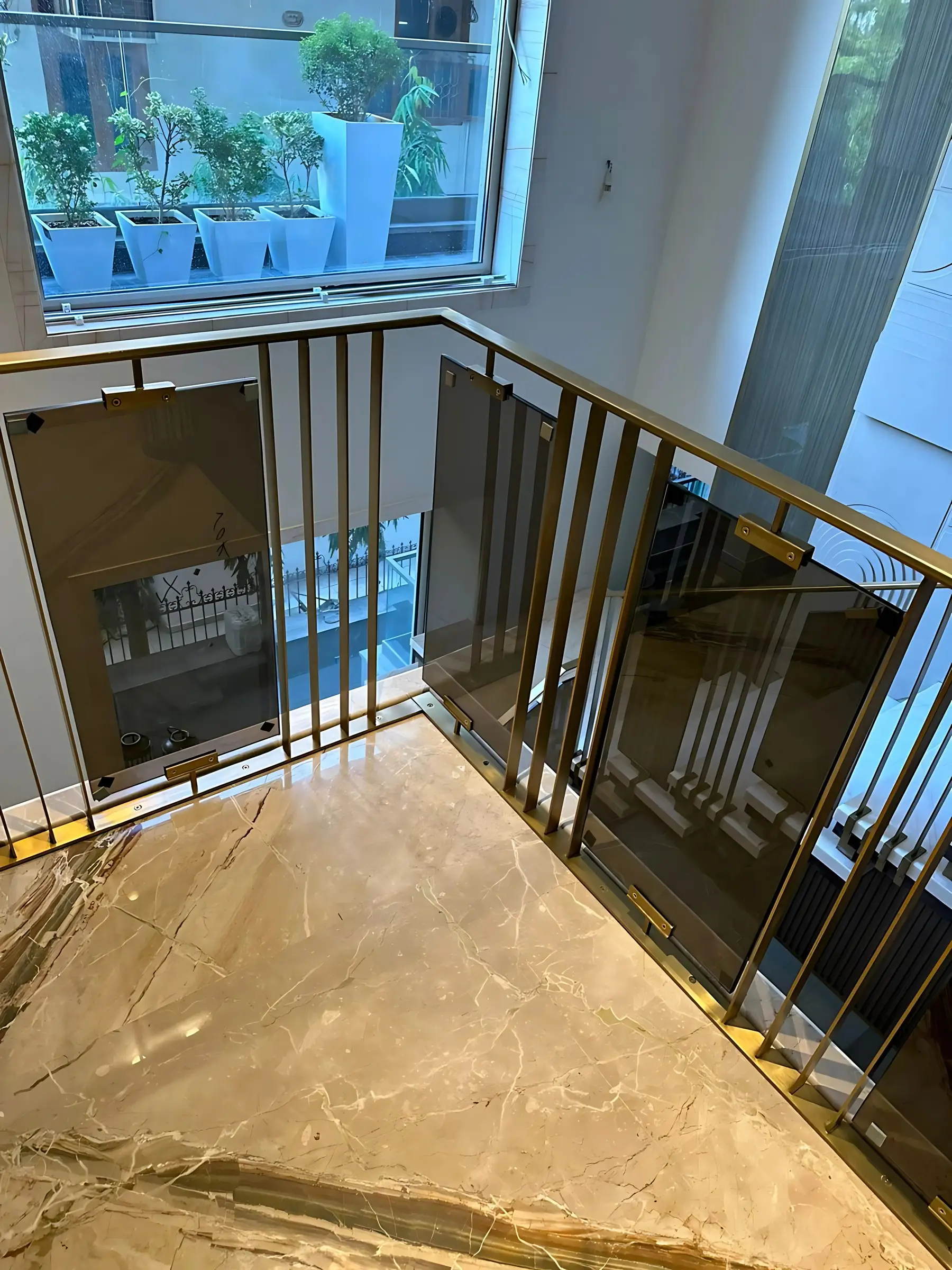
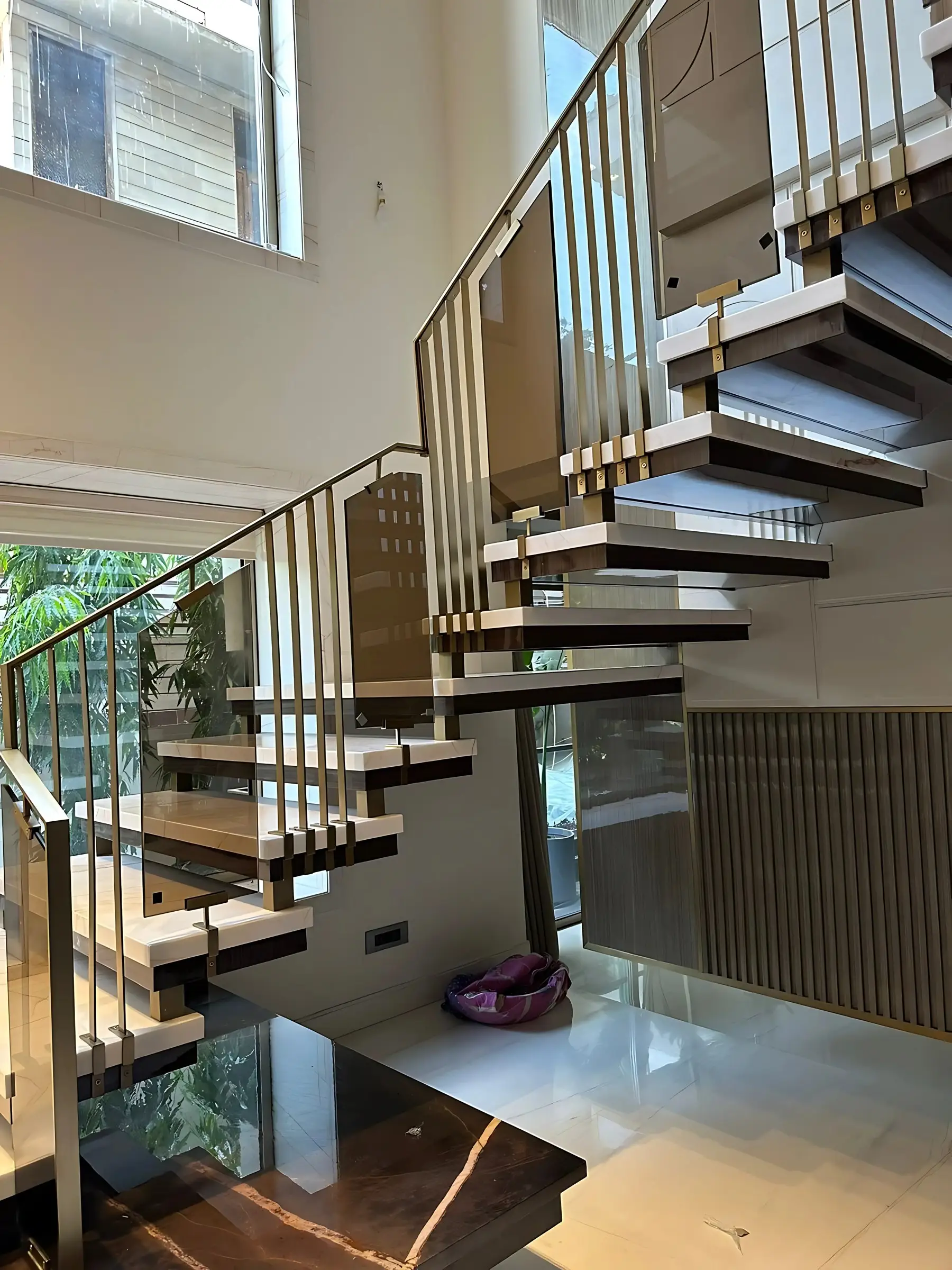
Bespoke bronze spiral staircase rising through a double-height lobbyBronze-finished spiral staircase curving through a marble-clad lobbyBronze-clad staircase with a glass balustradeBrass balustrade beside a gold mural staircaseOrnate gold balustrade on a curved staircaseCast brass ornamental balustrade panelBrass balusters on a curved timber staircaseBlackened steel geometric balustrade panelBrass detailing on cantilevered staircase treadsMetal and glass staircase balustrade in a residenceBronze-clad staircase spine during fabricationMetal railing and staircaseMetal railing and staircaseMetal railing and staircaseMetal railing and staircaseMetal railing and staircaseMetal railing and staircaseMetal railing and staircaseMetal railing and staircaseMetal railing and staircaseMetal railing and staircaseMetal railing and staircaseMetal railing and staircaseMetal railing and staircase

Questions about railings & staircases

Can a handrail be made without visible joints?

Around a turn, that is the hardest thing on a staircase and the thing that most decides how it is judged. A continuous rail is formed in sections that are joined, dressed and refinished so the joint disappears under the hand as well as to the eye. Where the geometry is helical it is set out from the building as built, not from the drawing, because the two are never quite the same.

Glass balustrade or metal — how do you choose?

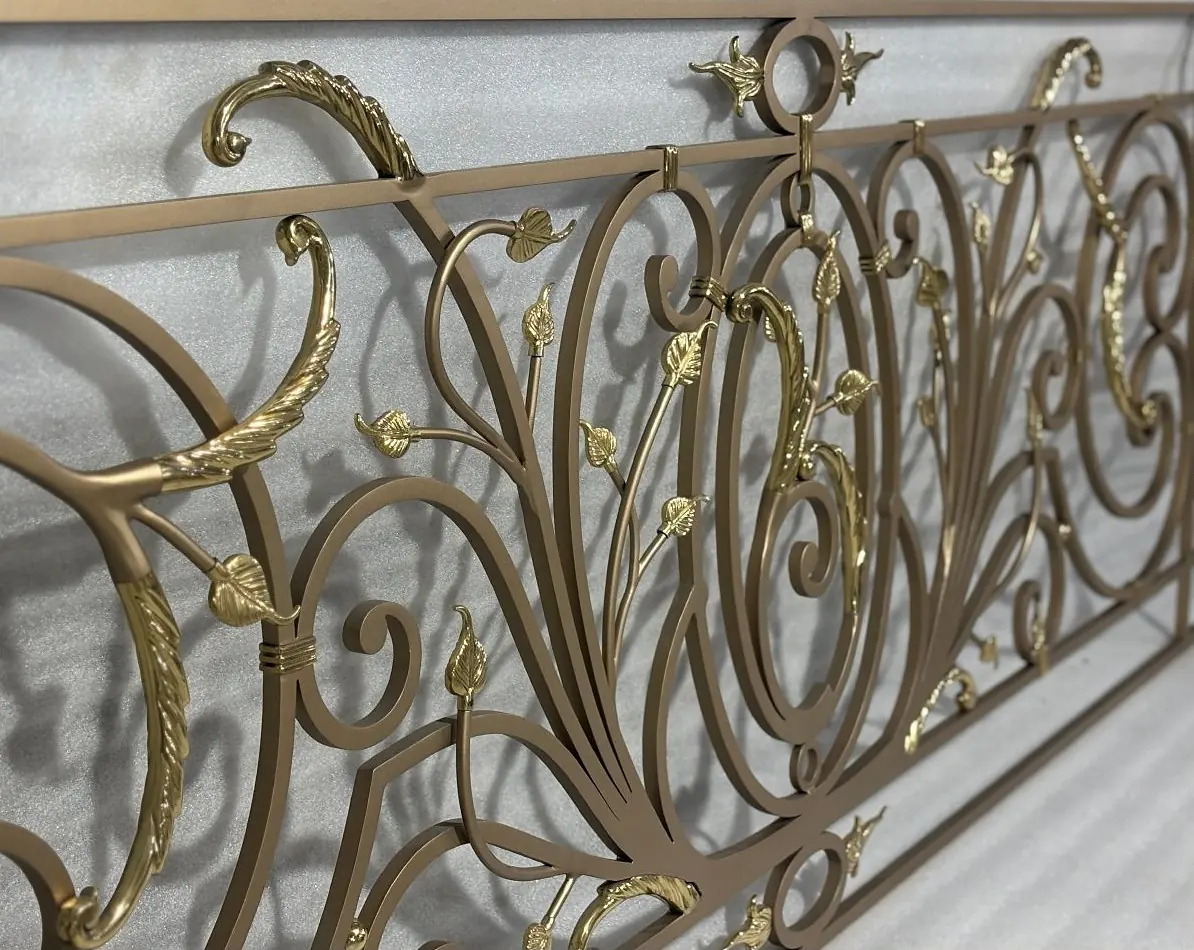
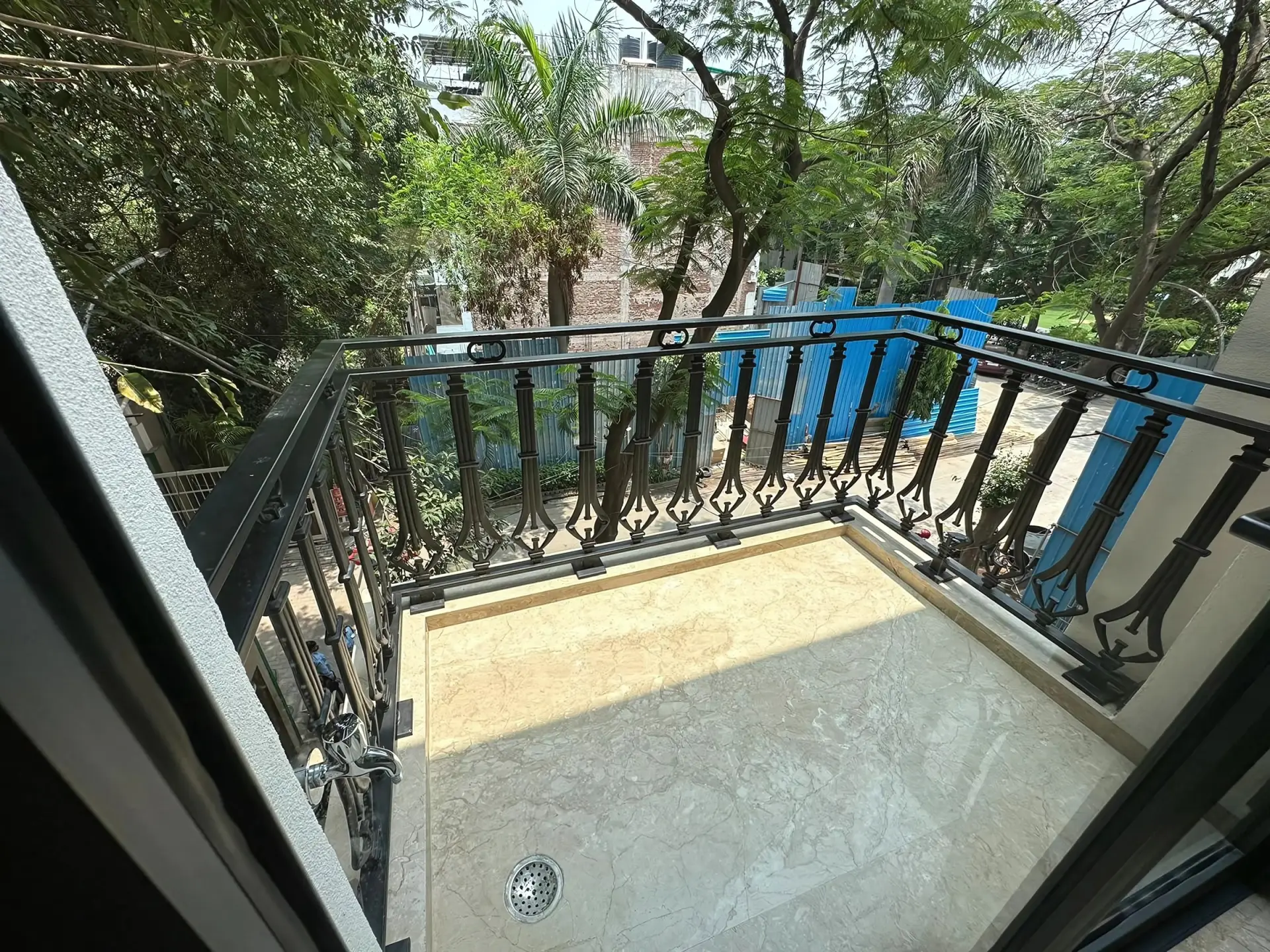
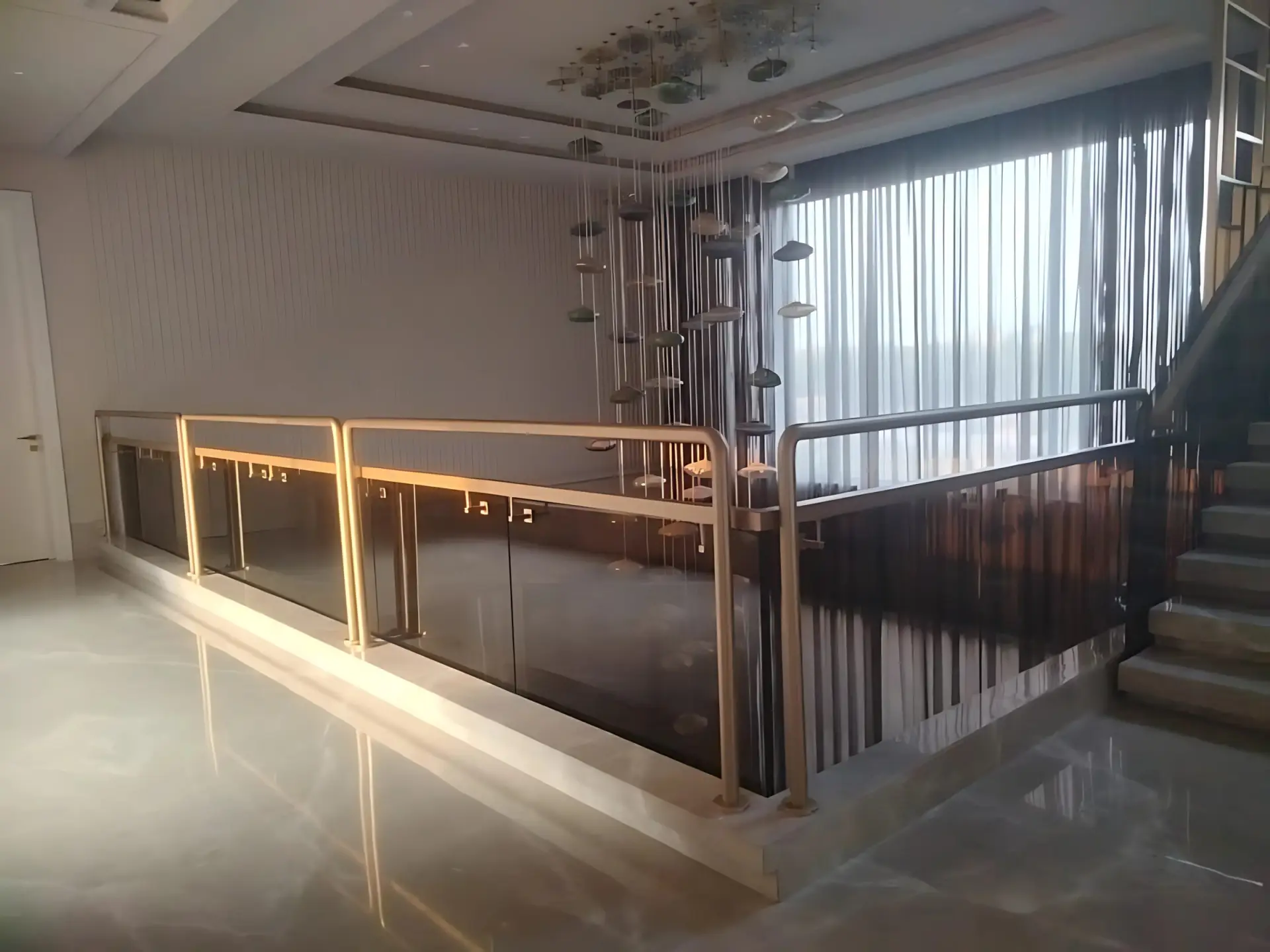
By what the stair is for. Glass disappears and lets a stair read as a sculpture; it also shows fingerprints, needs its own fixings and cannot carry a handrail on its own. A metal balustrade — cast panels, bars, a formed screen — is the stair’s character and carries the rail naturally. Many stairs use both: metal where hands go, glass where eyes go.

Start a conversation

Planning railings & staircases for a project?

Send a drawing, a sketch, or a photograph of something close to it. We will tell you what is buildable, what it costs and how long it takes.

WhatsAppCallEnquire