Metal that holds a reflection.
A mirror frame is a small piece of metalwork that has to be perfect, because the thing it holds shows every flaw twice.
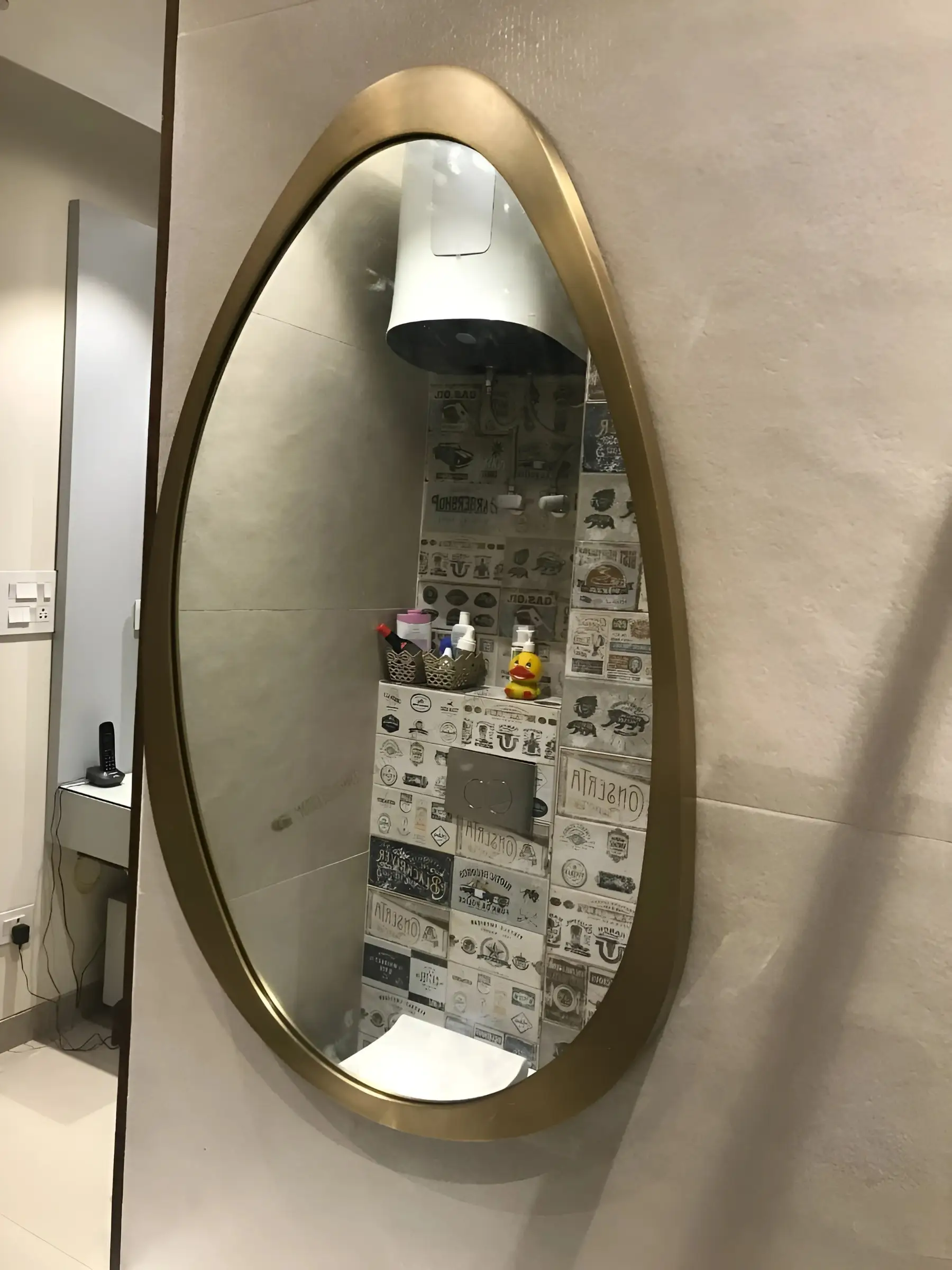
A framed mirror is unforgiving in a way most metalwork is not. The frame sits directly against a surface that reflects it, so a wave in a brass edge, a mitre that does not quite close, a brush grain that changes direction at the corner — each appears once in the metal and again in the glass beside it.
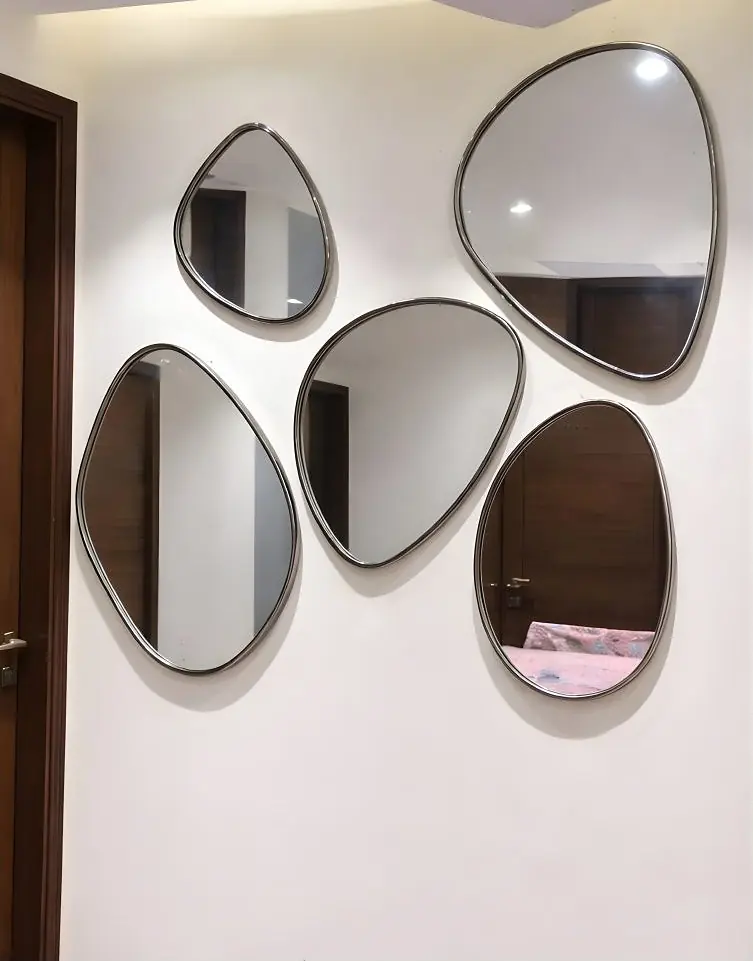
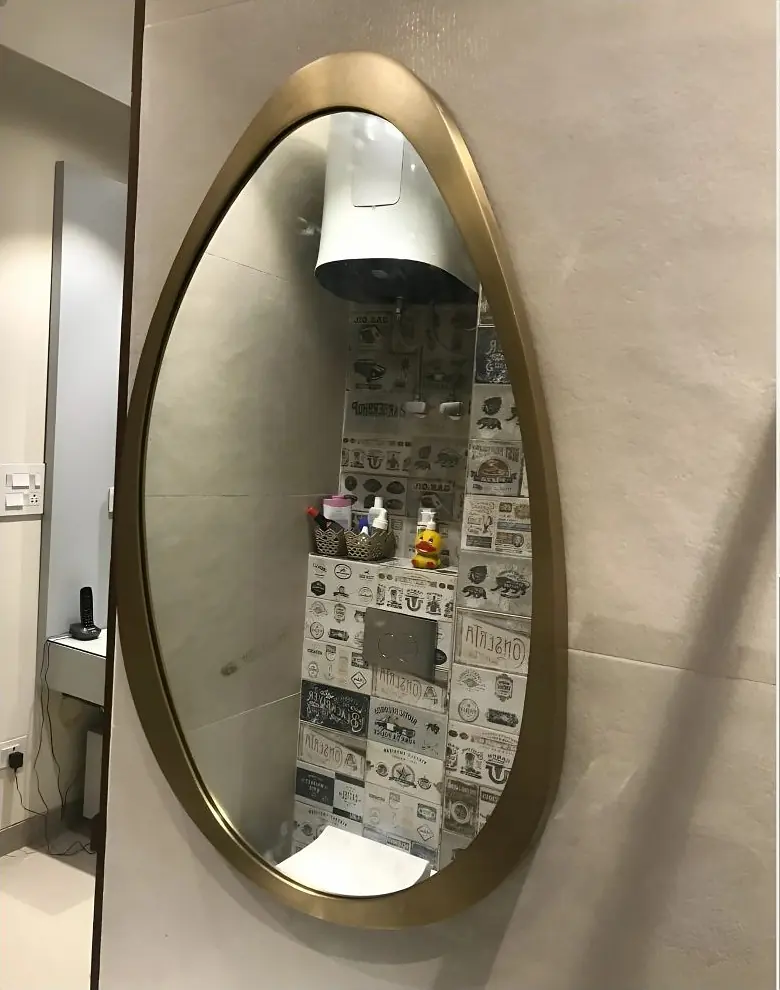
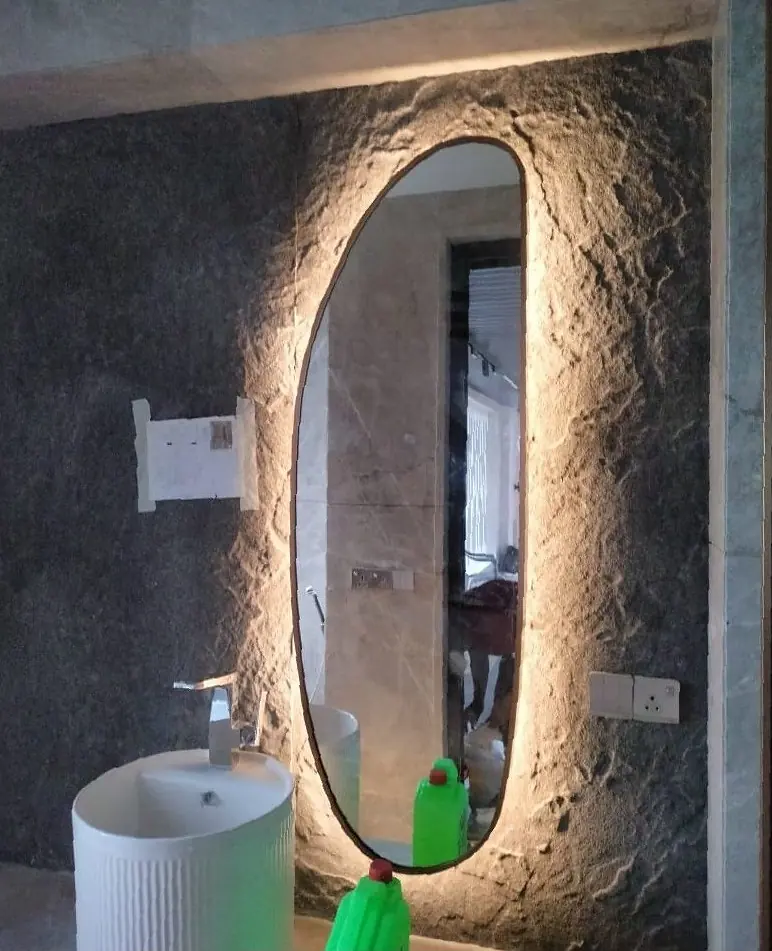
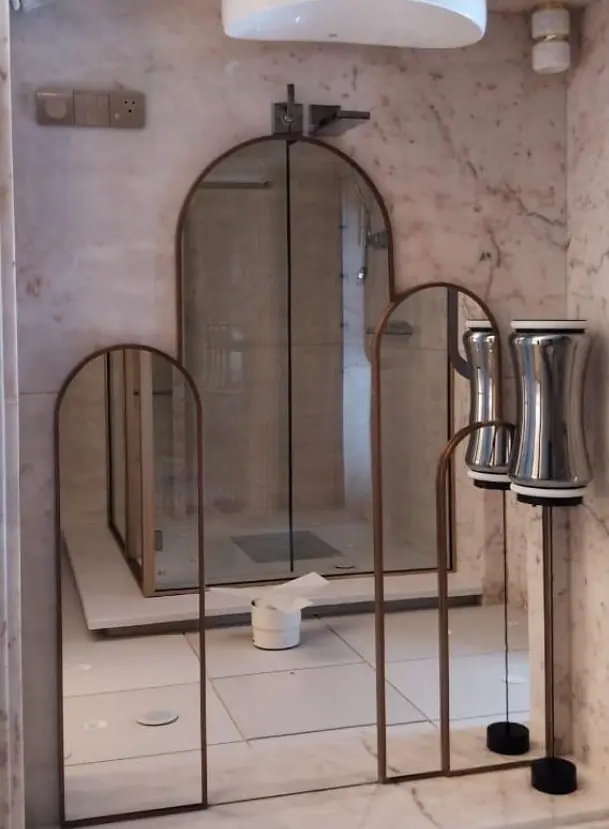
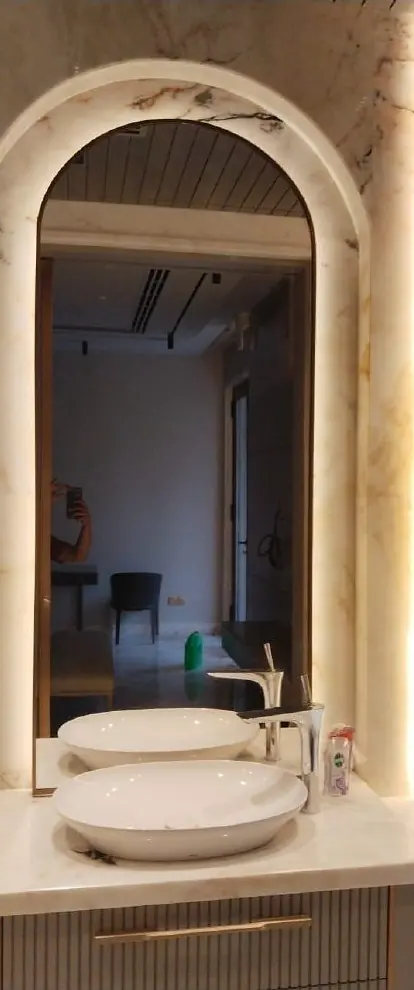
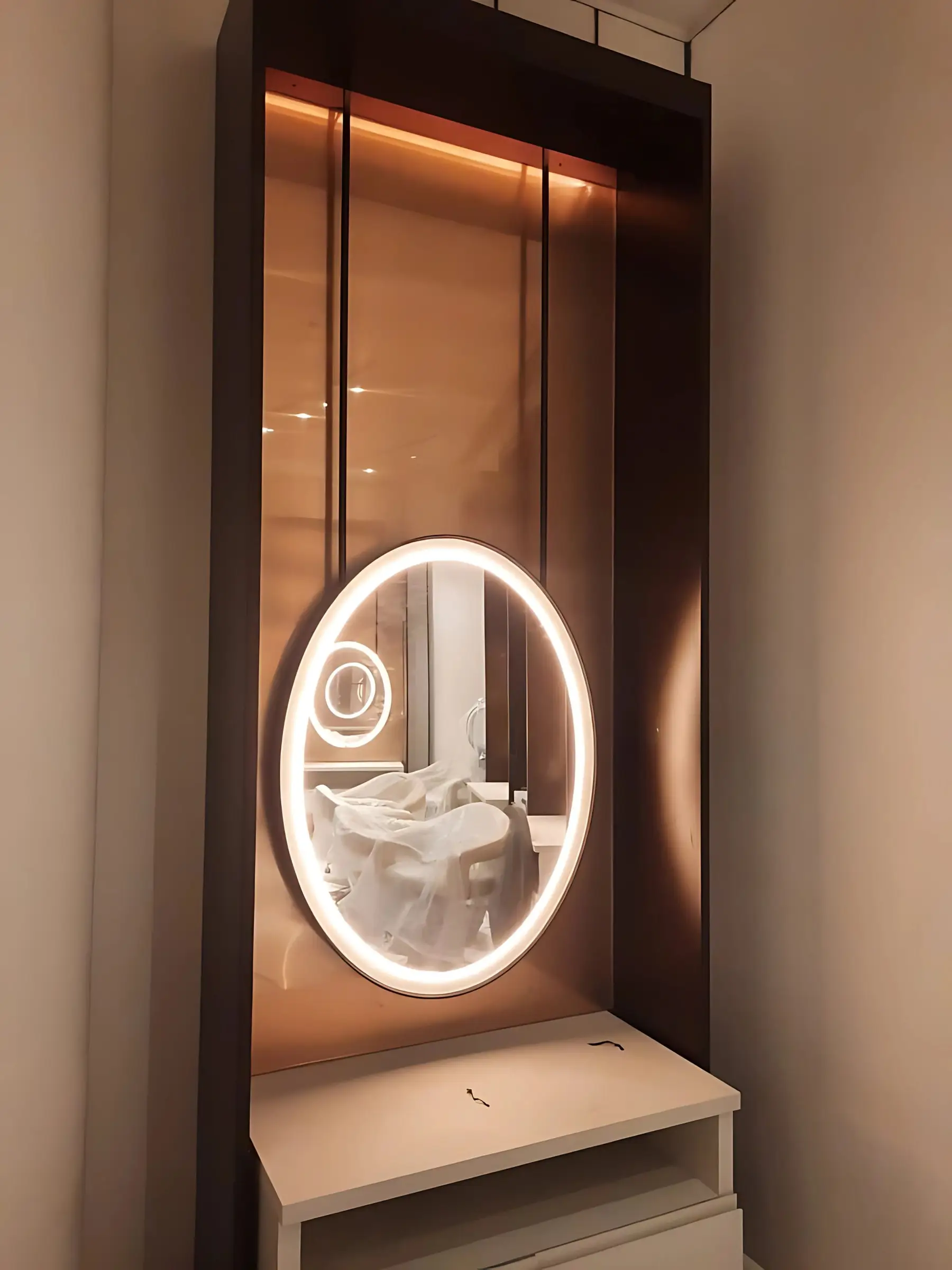
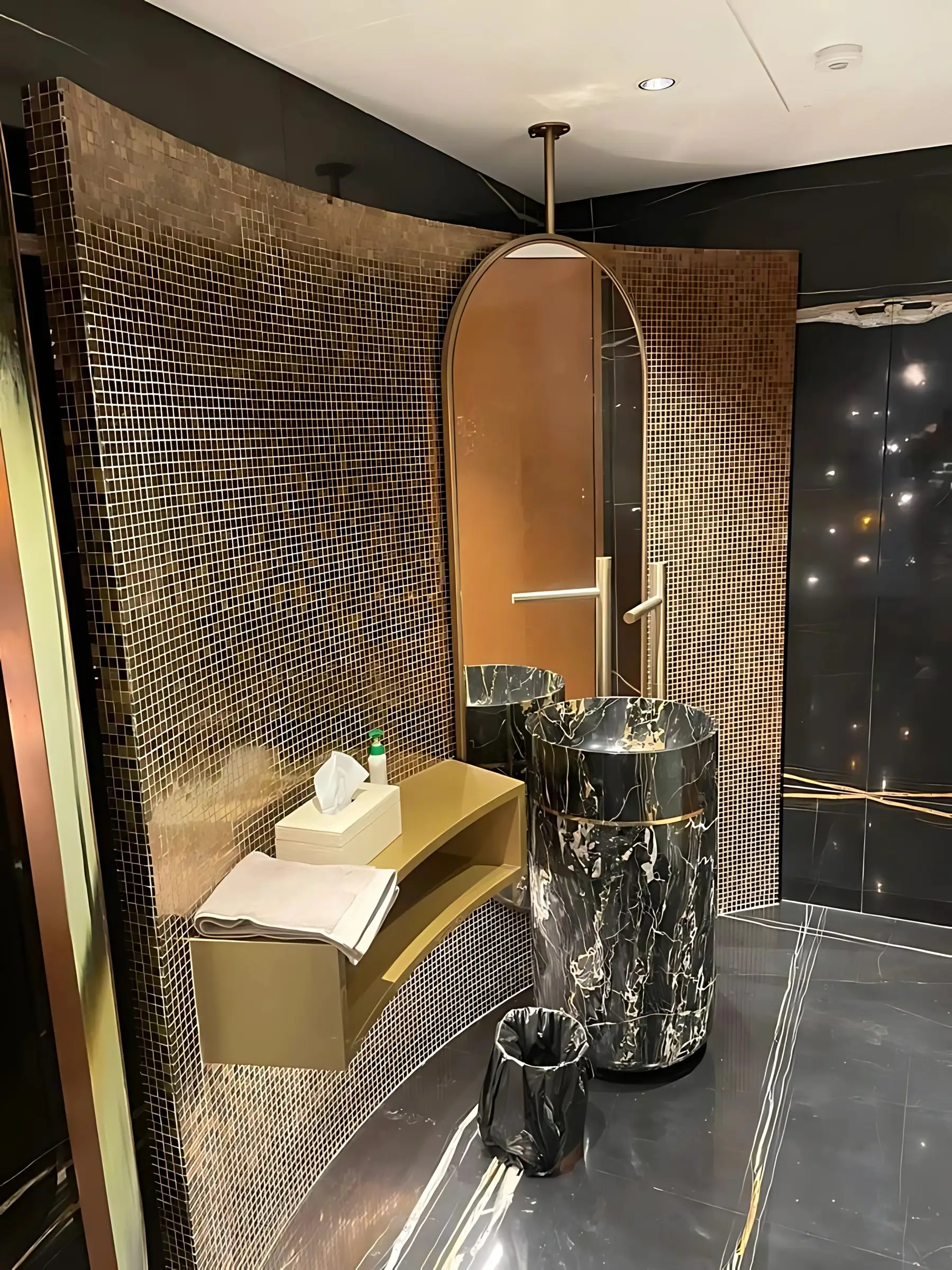
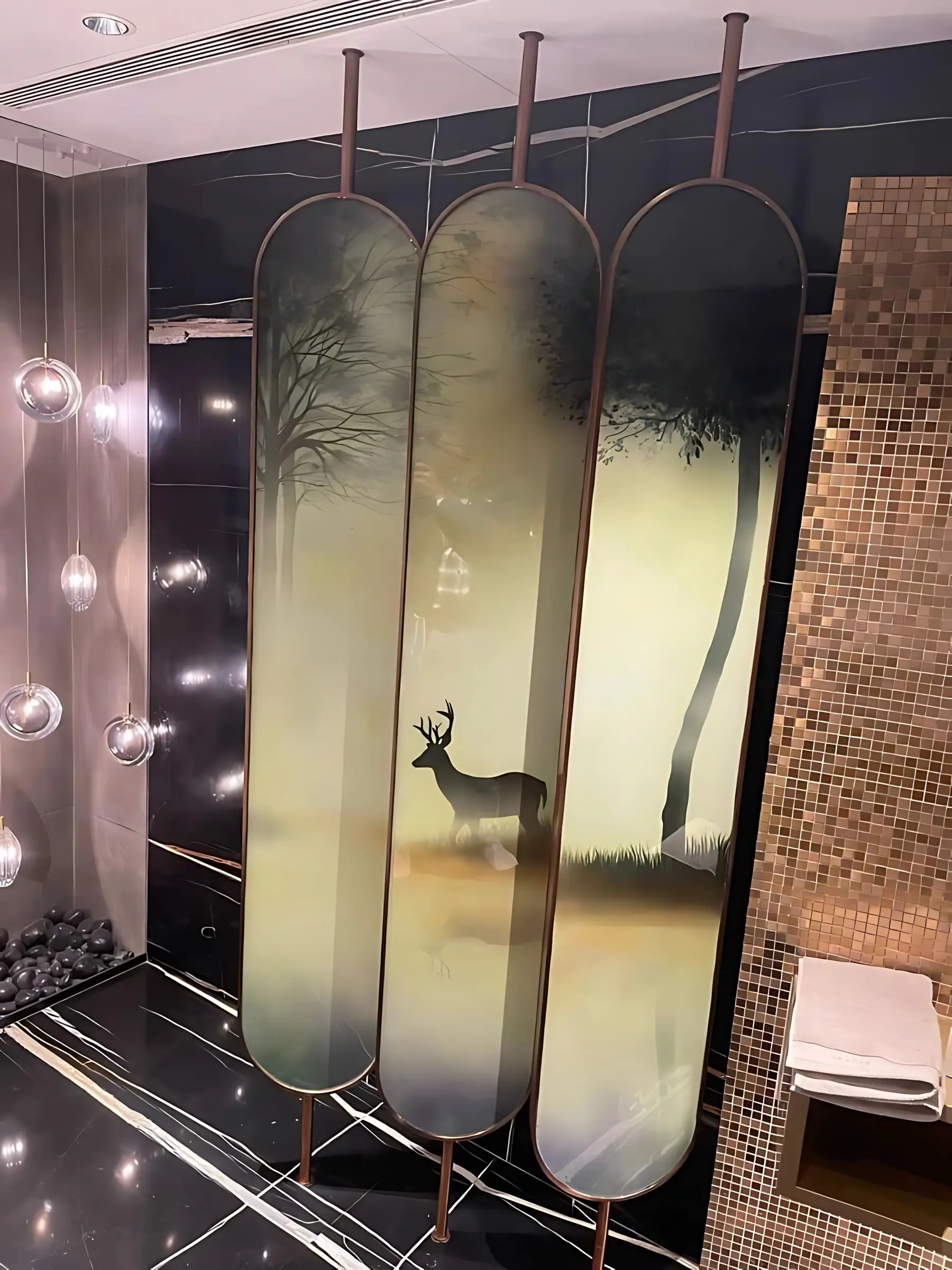
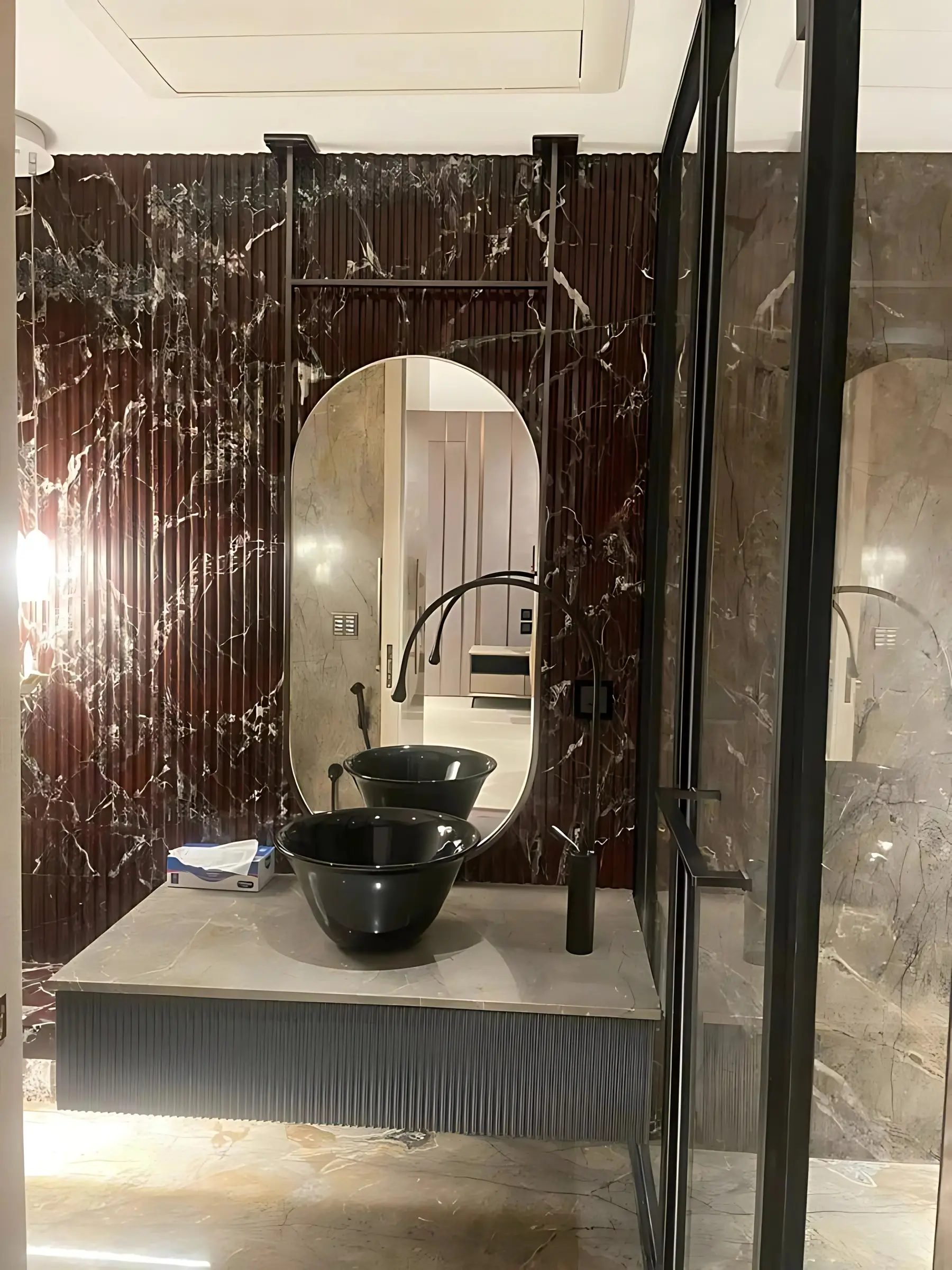
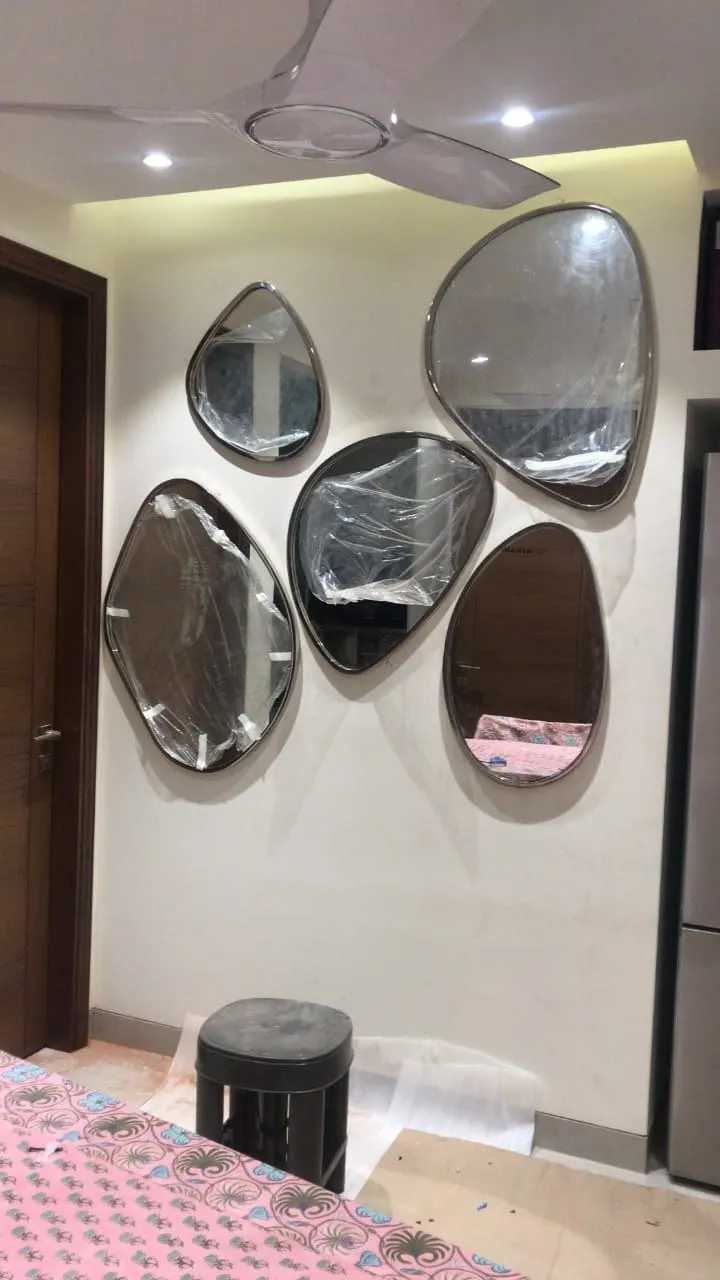
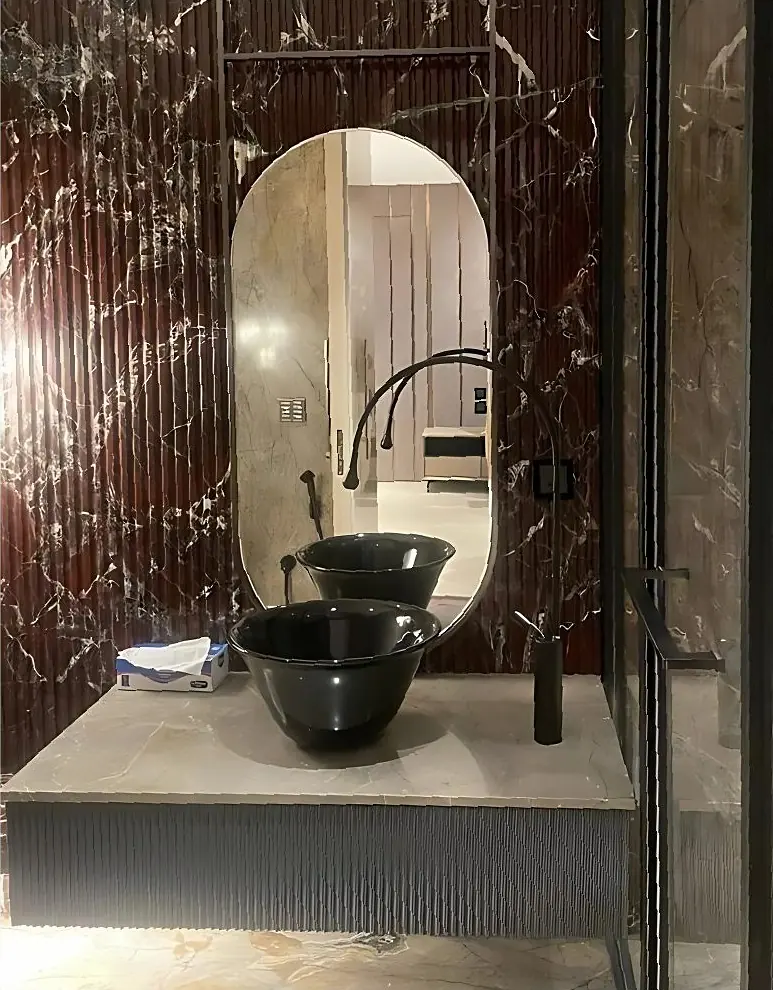
The shapes have moved a long way from the rectangle. Arched panels for a bathroom wall, a run of pill-shaped mirrors, organic outlines, ovals with a halo of light behind them: the frame is formed to the shape, and the back is engineered so the mirror can be hung, levelled and, if it is ever broken, replaced without cutting the frame.
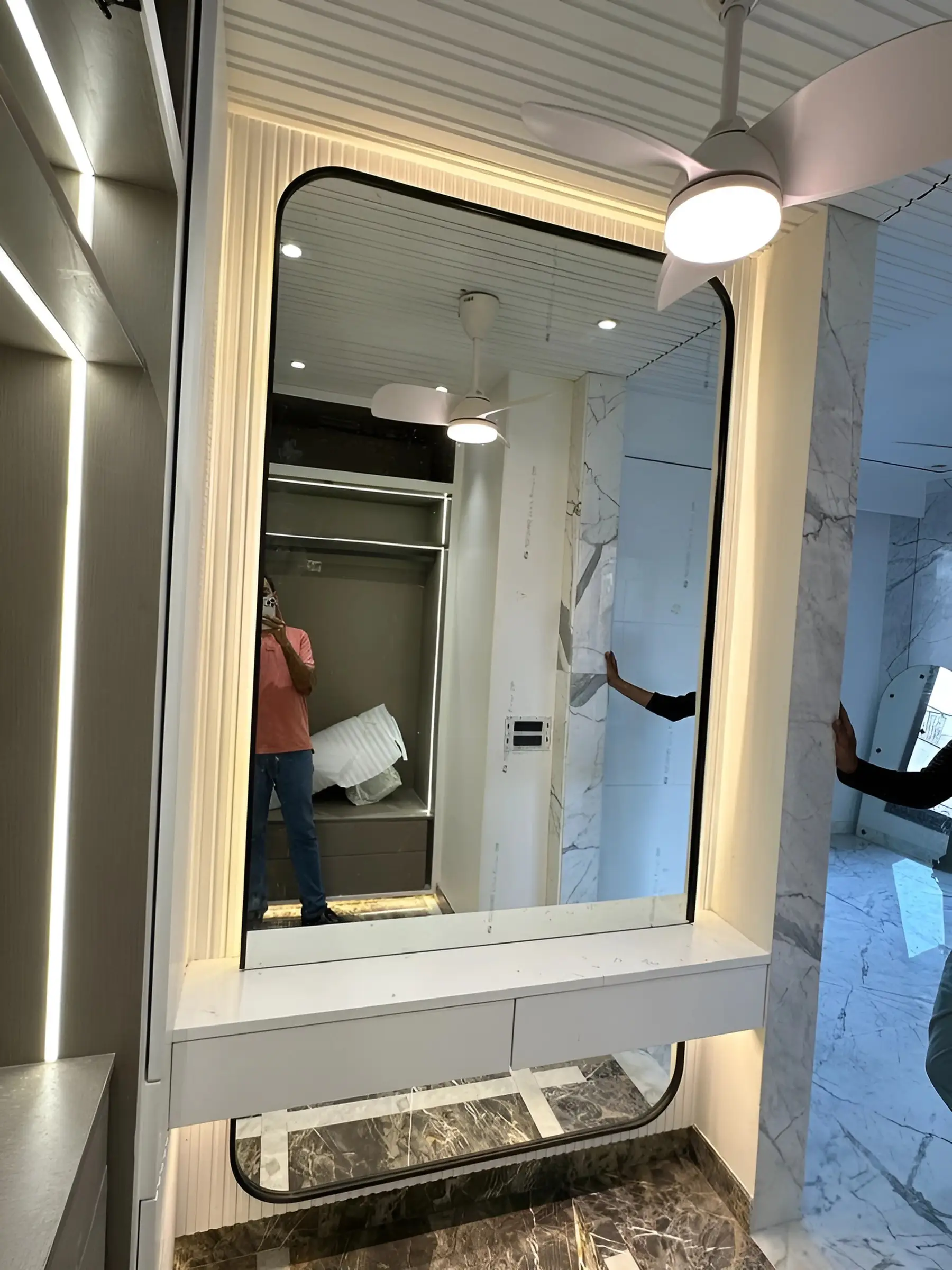
Backlighting is its own discipline. The light has to be even along the whole edge, the driver has to be reachable, and the heat it makes has to have somewhere to go — behind a mirror in a bathroom, where it is also damp. A backlit frame is a small electrical enclosure that happens to be beautiful.
Above a vanity the frame is in the splash zone. Brass and bronze there are chosen with a finish that welcomes water spots rather than fighting them; stainless steel is chosen in a grain that hides them.