
Expertise · Signature work
Sculptures
Our signature: sculpture in metal, made by hand.

Products
Sculptures we make
Each one made to your drawing, size, metal and finish.


About sculptures
Commissioned metal sculpture for lobbies, atriums, gardens and public spaces: figures, animals, abstract forms and suspended installations, formed, welded and finished by hand.
Commissioned metal artwork, from hand-beaten wall reliefs to freestanding installations built from hundreds of cut profiles.
Art commissions arrive in the least resolved form of anything we build: a maquette, a rendering, sometimes a sketch. Turning that into a physical object means deciding things the artist did not have to — how it stands up, how it is fixed, how it is transported, and how it will look in ten years.
We work in two directions. Digitally, by slicing a form into profiles that are laser-cut and assembled. And by hand, where a sheet is beaten, formed and chased into shape by a craftsman who can see the form developing.
Most of the pieces we are proudest of use both.
How it is built
From idea to object
a sketch or model is developed into a hidden framework, and the metal skin is cut, formed and finished over it by hand.
From an idea to a finished piece
8 steps, from the workshop floor
From a sketch, a maquette or a digital form to a finished object. A flat sheet is cut, formed and finished into something that did not exist before: by machine where precision matters, by hand where character does.
The drawing is traced from the photograph of the finished piece: the line you see is the one the workshop worked to.

- Idea
- Drawing
- Hand
- Metal

Concept
It starts as a sketch, a maquette, a digital model or a sentence. We ask what the piece must do in its space before we ask what it is made of.
Drawing
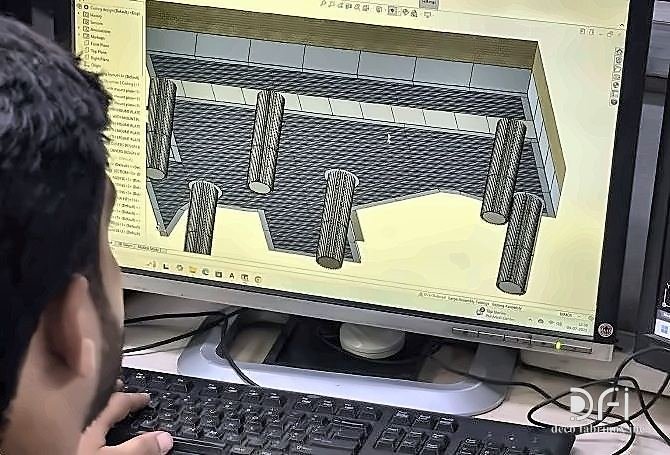
The idea becomes drawings: the form divided into parts that can be cut, formed and joined, with the structure that will carry it worked out on paper.

Cutting
Flat sheet is cut on the CNC laser into the profiles the drawings call for, precisely enough that the parts meet without forcing.

Forming and joining
Parts are bent, rolled and raised into shape, by machine and by hand, then welded. Joints are placed where the form can hide or carry them.

Grinding
Welds are ground back and dressed until the joint disappears into the surface, so the piece reads as one form, not an assembly.
Polishing and texture
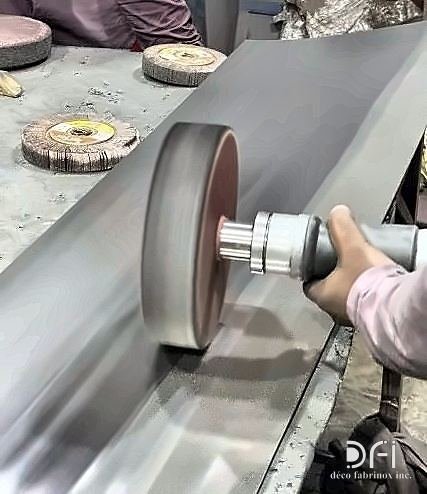
The surface is brought to its finish by hand: polished, brushed, hammered or left with the marks of the tool, depending on the piece.
Finish and patina
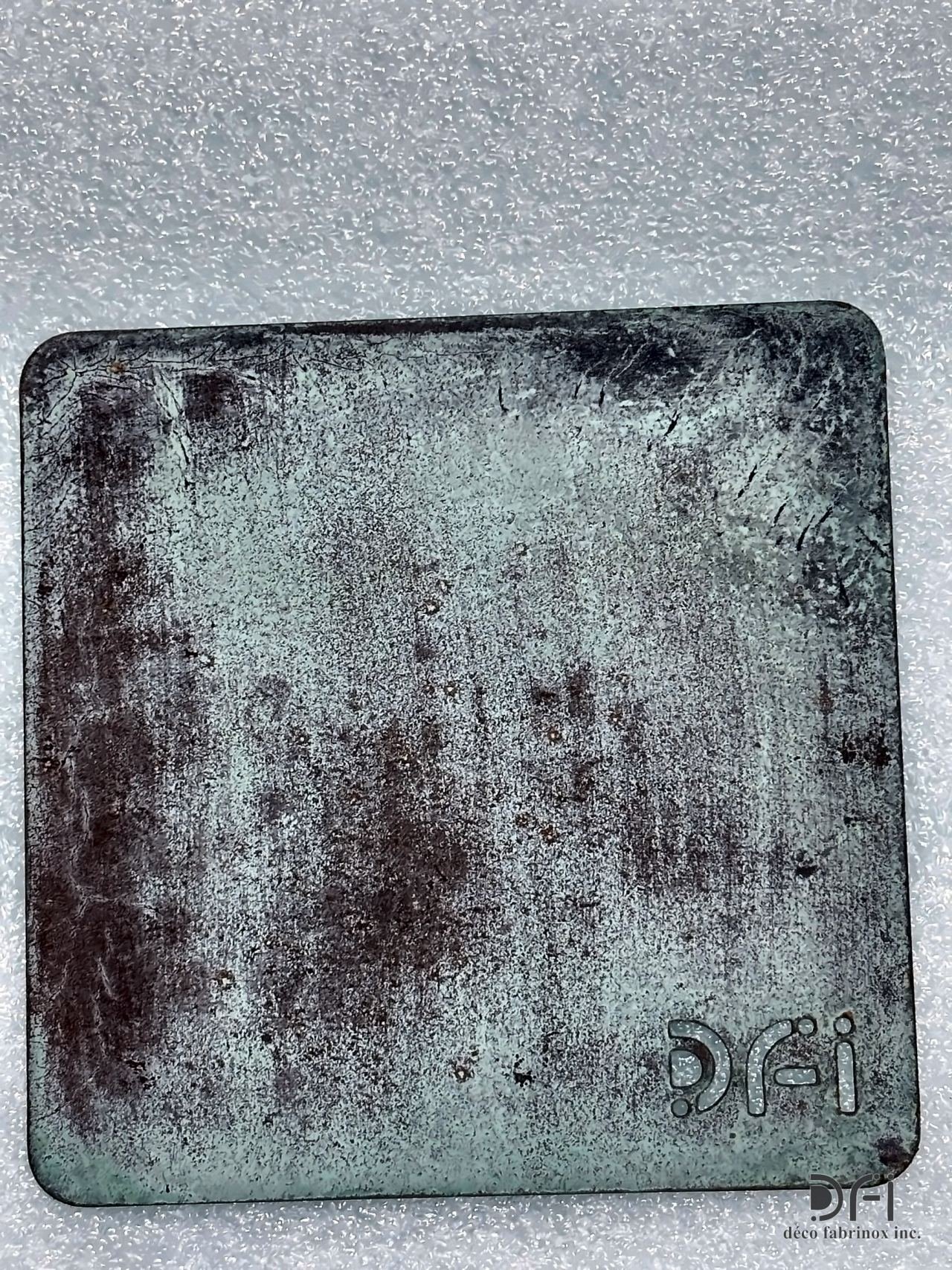
Colour and patina are developed on samples first and approved before they go on the piece, so the finished surface is the one that was agreed.
In its place
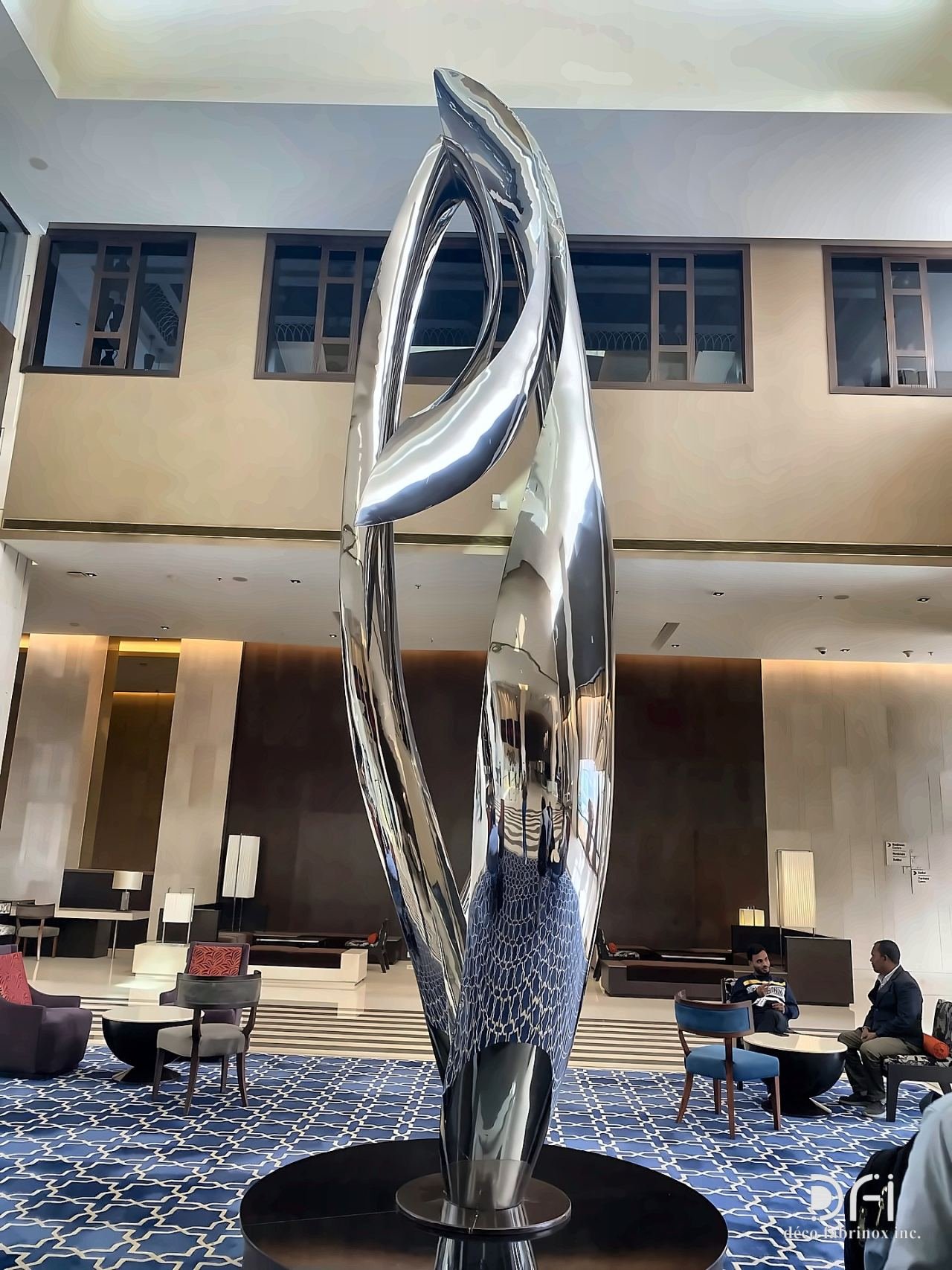
The piece is installed on its fixings and checked in its own light, where its surface and shadows are finally seen as intended.


Photographs
Sculptures we have made
Metals & finishes
What it can be made in
Every finish is approved on a physical sample before production.


Finishes


Questions & answers
Questions about sculptures
Can a sculpture be made from a small model?
That is the usual route. A maquette in clay, card or a 3D model is scaled up, and the work is in the translation: a form that holds itself at hand size has to carry its own weight at full size, survive installation, and stand on a base that does not show. The artist’s intent is protected by agreeing the finish on a sample rather than in words.
Will a patina on a sculpture keep changing?
Yes. A patina is colour grown in the metal, and it goes on developing — faster outdoors, where rain runs and hands touch. That is usually the point. If a fixed colour is wanted, the sculpture is either lacquered, which stops the change, or made in a metal and finish that does not move.
Can a sculpture stand outdoors in a garden?
Yes. Bronze and stainless steel are the classic outdoor sculpture metals; brass and copper also weather well and change colour over time. The base and its fixing to the ground are part of the design, so the sculpture stands safely in wind and does not invite climbing where it should not.
How is a large sculpture delivered and installed?
Large pieces are made in parts that join invisibly on site, or delivered whole with lifting points designed in. We check the route, the access and the floor or ground it will stand on, and install it ourselves.
Can we approve the sculpture before it is finished?
Yes. You approve a drawing or model first, then the form before the final finish is applied. The finish itself is agreed on a sample, because patina and polish are judged far better in the hand than in a photograph.
What does a ceiling installation hang from?
From the building's structure, not from the false ceiling. Each element hangs on a wire or rod fixed above, and the fixings are planned with the structural engineer or the building owner, especially in an atrium where the drop is high.
Can an installation be cleaned once it is up?
Yes, if access is planned. Pieces in an atrium are cleaned from a lift or tower, so we prefer finishes that stay presentable with little cleaning, like lacquered brass or patina. Very high installations are designed so individual elements can be lowered for care.
How do you work out the arrangement of a flock or cluster?
On a drawing and a 3D model of the space, viewed from where people stand and walk. The heights and spacing are set out on site from that model, and adjusted while hanging so the composition reads as intended from the main viewpoints.
Signature work
Also in this group


Start a project
Have something extraordinary in mind?
Send a drawing, a sketch, or a photograph of something close to it. We will tell you what is buildable, what it costs and how long it takes.